Sacred Five Elements
Dual-Voice
Bhutani Atharva Mantra Lyrics (Full) with Meaning in Hindi & English
Explore the full lyrics of Bhutani Atharva Mantra with Hindi and English meaning. Listen to the audio and understand every line for easy devotion and daily chanting.
Bhutani Mantra
Five Elements
Elemental Harmony
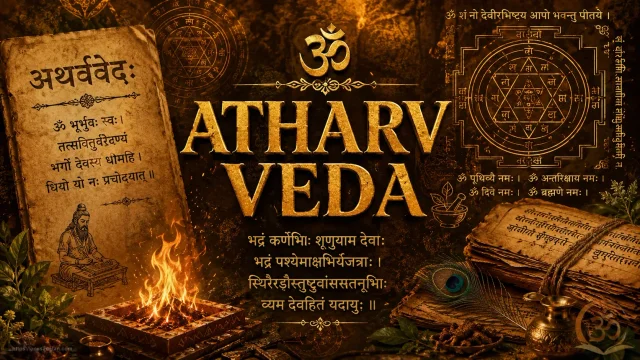
Atharva Veda
Pancha Mahabhuta
ॐ
हिन्दी सारांश
भूतानि अथर्व मंत्र भूतानि पञ्च (पांच भूत) महाभूतानि (महाभूत) पृथिवी (पृथ्वी) आप् (जल) तेजः (अग्नि) वायुः (वायु) आकाशः (आकाश) की स्तुति करता है। तानि नो देवाः (वे सभी देव हमें) रक्षन्तु (रक्षा करें) सर्वदा (सदैव) सर्वत्र (सर्वत्र) सर्वेषु दिशासु (सभी दिशाओं में)। भूमिः मे शान्तिः (पृथ्वी से मुझे शांति) आपः शान्तिः (जल से शांति) अग्निः शान्तिः (अग्नि से शांति) वायुः शान्तिः (वायु से शांति) आकाशः शान्तिः (आकाश से शांति) सर्वं शान्तिः (सब कुछ शांति) शान्तिः एव शान्तिः (शांति ही शांति) - पंच तत्वों की पूर्ण समरसता।
卐
English Summary
The Bhutani Atharva Mantra honors: 'The five great elements (bhutani pancha mahabhu tani) - Earth (prithivi), Water (ap), Fire (tejah), Air (vayuh), and Ether/Space (akasah). May those divine elements protect us (tani no deva rakshantu) always, everywhere, in all directions (sarvada sarvatra sarveshu dishasu). Peace from earth (bhumir me shantih), peace from water (apah shantih), peace from fire (agnih shantih), peace from air (vayuh shantih), peace from space (akasha shantih), all is peace (sarvam shantih), peace indeed is peace (shantir eva shantih).' This creates elemental harmony.
Detailed Spiritual Essence
In हिन्दी & English
Detailed Spiritual Essence
OneSanatan.com पर आपका स्वागत है। यह गहन आध्यात्मिक स्तोत्र अथर्ववेद के प्राचीन ज्ञान से लिया गया है, जिसे पारंपरिक रूप से ब्रह्मांडीय संतुलन, आरोग्य और सार्वभौमिक सुरक्षा का एक पवित्र स्रोत माना जाता है। इसके प्रारंभिक श्लोक—‘भूतानि पञ्च महाभूतानि पृथिव्यप्तेजोवायुराकाशाः’—हमारा ध्यान अस्तित्व के मूल तत्वों—पृथ्वी, जल, अग्नि, वायु और आकाश—की ओर आकर्षित करते हैं। वैदिक ऋषियों की मौखिक परंपरा के माध्यम से संरक्षित यह पाठ अथर्ववेद संहिता का हिस्सा है, जिसे विद्वान सामान्यतः ईसा पूर्व दूसरी से पहली सहस्राब्दी के कालखंड का मानते हैं। सनातन धर्म के अंतर्गत, अथर्ववेद को न केवल व्यावहारिक अनुष्ठानों के लिए, बल्कि ब्रह्मांड और मानव शरीर के बीच संतुलन बनाए रखने वाले गूढ़ दार्शनिक रहस्यों के लिए भी विशेष स्थान प्राप्त है।
साहित्यिक और भाषाई दृष्टिकोण से, यह रचना वैदिक संस्कृत में रेषित है, जिसमें कठोर शास्त्रीय छंदों के स्थान पर प्रवाहमयी मंत्रात्मक लय का उपयोग किया गया है। यह पाठ एक सुरक्षात्मक प्रार्थना (शांति पाठ) के रूप में आगे बढ़ता है, जिसका उद्देश्य काल और दिशा की सीमाओं से परे दैवीय कृपा का आह्वान करना है। ‘शान्तिः’ शब्द की बार-बार पुनरावृत्ति एक आंतरिक ध्वनि-एंकर के रूप में कार्य करती है, जो मन को शांत करती है और साधक के भीतर सूक्ष्म ऊर्जा को संतुलित करती है। गीता प्रेस गोरखपुर द्वारा प्रकाशित पारंपरिक ग्रंथों में भी इस प्रकार के वैदिक शांति पाठों के महत्व को रेखांकित किया गया है, जो आंतरिक चेतना और बाहरी वातावरण दोनों को शुद्ध करने में सहायक होते हैं।
पारंपरिक रूप से, इस मंत्र का पाठ दैनिक संध्यावंदन, हवन और वास्तु शांति जैसे आयोजनों के दौरान पर्यावरणीय असंतुलन को दूर करने के लिए किया जाता है। विशेष अवसरों, ऋतु संधियों और सुबह की पूजा के समय साधक इसे अपने नित्य क्रम में शामिल करते हैं। दीपक प्रज्वलित करने के पश्चात सभी दिशाओं में सकारात्मक ऊर्जा के विस्तार के लिए इस पाठ का विशेष महत्व है। यद्यपि इसके पाठ के लिए किसी विशिष्ट वार का बंधन नहीं है, तथापि गुरुवार और पर्व के दिनों में इसे साधना का अंग बनाना अत्यंत फलदायी माना जाता है।
आध्यात्मिक दृष्टि से, यह आह्वान प्रकृति के साथ हमारे गहरे संबंध का स्मरण कराता है। पंचतत्वों को संबोधित करते हुए और सभी दिशाओं में सदैव अपनी रक्षा की प्रार्थना करते हुए (‘सर्वदा सर्वत्र सर्वेषु दिशासु’), यह मंत्र व्यक्ति और ब्रह्मांड के बीच के भेद को मिटाता है। पारंपरिक आचार्यों का मानना है कि सच्ची शांति केवल संघर्ष का अभाव नहीं, बल्कि ब्रह्मांडीय नियमों के प्रति पूर्ण समर्पण है। इस पाठ के माध्यम से साधक अपने भौतिक शरीर को—जो पंचतत्वों से बना है—दिव्य चेतना के साथ संरेखित करता है, जिससे मन में निर्भयता और स्थिरता उत्पन्न होती है।
संपादकीय सत्यापन के रूप में, इस पाठ और इसके पारंपरिक संदर्भों की पुष्टि गीता प्रेस द्वारा प्रकाशित वैदिक स्तोत्र संकलनों से होती है, जो आधुनिक साधकों के लिए प्राचीन ऋचाओं को प्रामाणिक रूप से प्रस्तुत करते हैं। OneSanatan.com के माध्यम से हम इन पवित्र मंत्रों को आपके समक्ष प्रस्तुत कर रहे हैं ताकि आप वेदों की शाश्वत परंपरा से जुड़कर अपनी दैनिक साधना को सुदृढ़ कर सकें।
Welcome to OneSanatan.com. This profound spiritual invocation draws from the ancient wisdom of the Atharva Veda, traditionally revered as a sacred source of cosmic harmony, healing, and universal protection. The opening verses—‘भूतानि पञ्च महाभूतानि पृथिव्यप्तेजोवायुराकाशाः’—direct our awareness to the foundational elements of existence: earth, water, fire, air, and ether. Historically preserved through the oral tradition of Vedic rishis, this text belongs to the vast corpus of the Atharvaveda Samhita, which scholars generally date to the late second and early first millennia BCE. Within the broader framework of Sanatan Dharma, the Atharva Veda is celebrated not merely for practical rituals, but for its profound cosmological insights into maintaining balance between the macrocosm of the universe and the microcosm of the human body.
From a literary and linguistic perspective, this composition is rendered in classical Vedic Sanskrit, utilizing flexible devotional metres (Chhandas) rather than strict classical prosody. The text flows with the natural cadence of a protective prayer (Kavacha or Shanti Patha), designed to invoke divine grace across all dimensions of time and space. The rhythmic repetition of the word ‘Shanti’ (peace) functions as a sonic anchor, progressively stilling the restless mind and harmonizing the subtle energy centers within the practitioner. As noted in traditional publishing traditions such as those upheld by Gita Press Gorakhpur, Vedic peace invocations are structurally crafted to cleanse both the inner psyche and the outer environment, bridging poetic expression with metaphysical efficacy.
Traditionally, this mantra is recited during daily sandhyavandanam, homas (fire rituals), and foundational housewarming ceremonies (Vastu Shanti) to neutralize environmental disharmony. It holds a cherished place during seasonal transitions, particularly when welcoming solstices, equinoxes, or times of collective planetary stress. Practitioners often integrate this sequence into their morning puja following the lighting of the deepam, facing the cardinal directions to establish a protective energetic boundary. While no specific weekday is mandatory, Thursdays and auspicious festival mornings are frequently chosen by seekers desiring deeper spiritual stability and mental equanimity.
Spiritually, the invocation serves as a powerful reminder of humanity's interconnectedness with nature. By addressing the five elements directly and asking divine forces to protect us ‘sarvada sarvatra sarveshu dishasu’ (always, everywhere, in all directions), the mantra dissolves the illusion of separation between the individual and the cosmos. Achangas and traditional commentators emphasize that true peace is not merely the absence of conflict, but the realization of supreme order (Rita). By chanting this text, the seeker aligns their physical frame—composed of the five elements—with the divine will, inviting absolute stillness and inner fearlessness.
As an editorial verification note, the text and its contextual usage find corroboration in standard Vedic compilation catalogues and traditional editions published by Gita Press, which faithfully preserve ancient Shanti mantras for modern practitioners. Seekers looking to deepen their engagement with these verses will find that regular, contemplative recitation fosters profound emotional grounding. Through OneSanatan.com, we offer these sacred syllables to help you anchor your daily spiritual practice in the timeless heritage of the Vedas.
Divine Chanting
Bhutani Atharva Mantra - AI Voice
Sacred AI Recitation
Premium Devotional Experience
ॐ
Sacred Script
तानि नो देवा रक्षन्तु सर्वदा सर्वत्र सर्वेषु दिशासु।
भूमिर्मे शान्तिरापः शान्तिरग्निः शान्तिः
वायुः शान्तिराकाशः शान्तिः सर्वं शान्तिः शान्तिरेव शान्तिः॥
Spiritual Guidance
What is the origin and who is the composer of the Bhutani Atharva Mantra?
The Bhutani Atharva Mantra originates directly from the sacred Atharva Veda, one of the four foundational texts of ancient Vedic Hinduism. Classical tradition attributes its composition to the visionary sages and rishis who channeled these cosmic hymns to harness elemental forces. On OneSanatan.com, we present this rare Vedic verse with precise Sanskrit structuring to honor its authentic ancient roots.
When is the best time and muhurat to recite this Atharva Veda mantra?
The optimal time to recite the Bhutani Atharva Mantra is during the serene hours of Brahmamuhurta, roughly 90 minutes before sunrise, or during dusk (Sandhyavandanam). Reciting it facing east or north in a clean, quiet space maximizes its energetic resonance. Consistency matters more than duration, so practitioners often integrate it into their daily morning puja routine.
What are the spiritual and protective benefits of this mantra according to classical texts?
According to Vedic principles found in the Atharva Veda, chanting this mantra invokes divine shielding against negative astral influences and elemental imbalances. Classical commentaries suggest that regular recitation purifies the subtle body and fosters deep inner fearlessness. It aligns the practitioner with universal harmony, a benefit echoed across various ancient spiritual treatises.
Is this mantra suitable for beginners, and how should they approach its practice?
Yes, absolute beginners can safely practice the Bhutani Atharva Mantra by starting with proper listening to correct their pronunciation. It is recommended to chant it aloud softly (Upamshu japa) before progressing to mental recitation (Manasika japa). OneSanatan.com provides both Hindi and English translations to help newcomers deeply connect with the meaning behind every sacred syllable.
Are there regional variations in how the Bhutani Atharva Mantra is chanted?
While the core Sanskrit text remains universally consistent across India, subtle regional variations exist in accentuation and phonetic delivery based on Vedic schools (Shakhas). Southern traditions may emphasize specific Dravidian tonal nuances, whereas Northern traditions often lean toward standard Vedic recitation styles. Despite these minor stylistic differences, the core spiritual potency and meaning remain entirely unchanged.
Explore More Divine Text
Related Prayers
2 Voices
shuddhikaran mantra lyrics
Shuddhikaran Mantra Lyrics with Hindi & English Meaning – शुद्धिकरण मंत्र, Purity, Protection & Benefits
2 Voices
swasti na indro mantra lyrics
Swasti Na Indro Mantra Lyrics (ॐ स्वस्ति न इन्द्रो) – Meaning, Translation & Benefits

2 Voices
bhojan mantra lyrics
Bhojan Mantra (Brahmarpanam) Lyrics with Hindi & English Meaning – भोजन मंत्र, Gratitude & Mindful Eating
2 Voices
gayatri mantra lyrics
Gayatri Mantra Lyrics (ॐ भूर्भुवः स्वः) in Sanskrit, Hindi & English Meaning with Benefits
🕉️
शास्त्र-सम्मत • Shastric Verification
Drik Ganit Ephemeris Review
Classical Text Collation
OneSanatan Vidvat Parishad & Shastra Editorial Council (विद्वत् परिषद्)
Curated and cross-verified by traditional Sanskrit acharyas, Drik Ganit astronomical researchers, and Puranic editors. Every stotra, shloka, and festival calculation is reviewed against canonical classical editions — including Gita Press and Chaukhamba Sanskrit Sansthan — to safeguard textual fidelity, metric rhythm (Chhandas), and spiritual authenticity.