Sacred Divine Speech
Dual-Voice
Vak Atharva Mantra Lyrics (Full) with Meaning in Hindi & English
Explore the full lyrics of Vak Atharva Mantra with Hindi and English meaning. Listen to the audio and understand every line for easy devotion and daily chanting.
Vak Mantra
Divine Speech
Eloquence Prayer
Atharva Veda
Truthful Communication
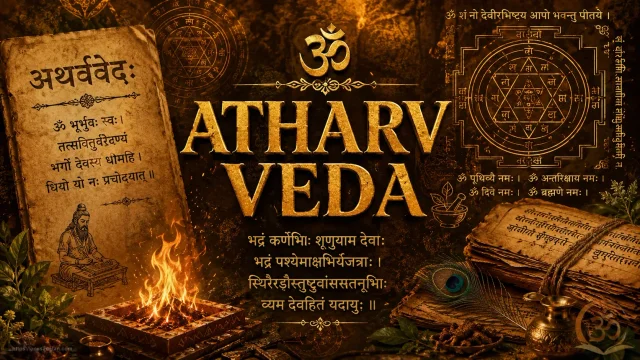
ॐ
हिन्दी सारांश
वाक अथर्व मंत्र वाक् देवी (हे वाणी देवी) परमेष्ठिनी (परम श्रेष्ठ) सर्वेषु वाचासु (सभी वाणियों में) की स्तुति करता है। वाचं मे अपि धेहि (मुझे वाणी प्रदान करो) ब्रह्मवादिनीम् (ब्राह्मण सत्य कहने वाली) की प्रार्थना। वाचो हि देवताः (वाणी ही देवता है) विश्वाः प्रजानाम् (सभी प्रजाओं के लिए) या नो वाचम् आवहत् (जो हमारी वाणी लाए) सा नः शं करोतु (वह हमारा कल्याण करे) का आह्वान।
卐
English Summary
The Vak Atharva Mantra honors: 'Goddess Vak (vag devi), supreme among all speeches (parameshthini sarveshu vachasu). Grant me the speech (vacham me api dhehi) that speaks Brahman truth (brahmavadinim). Speech is indeed the deity (vacho hi devata) of all people (vishvah prajanam). She who brings our speech (ya no vacham avahat), may she bless us (sa nah sham karotu).' This awakens divine eloquence and truth-speaking power.
Detailed Spiritual Essence
In हिन्दी & English
Detailed Spiritual Essence
OneSanatan.com पर आपका स्वागत है। वाक् अथर्व मन्त्र वाणी, शब्द और ब्रह्माण्ड की चेतना की अधिष्ठात्री देवी वाक् को समर्पित एक अत्यंत गहन और पवित्र आह्वान है। यह पावन रचना सीधे तौर पर वैदिक वांग्मय, विशेष रूप से अथर्ववेद की परम्परा से संबद्ध है। जहाँ पारंपरिक रूप से वैदिक सूक्तों को अपौरुषेय—अर्थात किसी मानवी कर्ता द्वारा रचित न होकर ऋषियों द्वारा समाधि की अवस्था में द्रष्ट्र रूप में प्राप्त माना गया है—वहीं अथर्ववेदीय शाखा इस विशिष्ट प्रार्थना को वाक्-शक्ति के आध्यात्मिक रहस्य को उजागर करने वाली एक कुंजी के रूप में संरक्षित करती है। ऐतिहासिक दृष्टि से उत्तर वैदिक काल से जुड़ी यह रचना इस प्राचीन भारतीय मान्यता को पुष्ट करती है कि वाणी केवल आपसी संवाद का माध्यम नहीं, बल्कि एक primordial cosmic energy है जो संपूर्ण यथार्थ को आकार देती है।
साहित्यिक और संरचनात्मक दृष्टिकोण से यह मन्त्र वैदिक संस्कृत में रंधित है और अथर्ववेदीय सूक्तों की विशिष्ट छंदोबद्ध शैली का अनुसरण करता है, जो गद्यात्मक अनुष्ठानिक सूत्रों और काव्यात्मक प्रवाह का सुंदर समन्वय प्रस्तुत करती है। इसकी भाषा गूढ़ और पारिभाषिक शब्दों से समृद्ध है, जिसमें देवी को परमेष्ठिनी (परम पद पर आसीन) और ब्रह्मवादिनी (ब्रह्मज्ञान का प्रतिपादन करने वाली) के रूप में संबोधित किया गया है। मन्त्र की संरचना एक विनम्र व्यक्तिगत प्रार्थना से प्रारंभ होकर—जहाँ साधक अपनी वाणी में ब्रह्मवादिनी की शक्ति का आह्वान करता है—समष्टिगत ब्रह्माण्ड की ओर अग्रसर होती है, यह दर्शाते हुए कि समस्त देवता और प्राणी उसी सार्वभौम वाक् के प्रवाह से पोषित होते हैं। यह काव्यात्मक प्रवाह मानव के सूक्ष्म स्वर और ब्रह्मांडीय स्पंदन के मध्य सुंदर सेतु का निर्माण करता है.
पारंपरिक जप और साधना के संदर्भ में, इस मन्त्र का उपयोग दैनिक वैदिक अनुष्ठानों, देवी-ोपासना तथा विद्यारंभ या उपनयन जैसे संस्कारों में प्रमुखता से किया जाता है जहाँ बुद्धि और वाणी पर नियंत्रण अत्यंत आवश्यक माना गया है। साधक इस स्तोत्र का पाठ प्रायः ब्रह्ममुहूर्त के पवित्र वेला में अथवा नवरात्र और वसंत पंचमी जैसे शक्ति एवं विद्या के पर्वों पर करते हैं। पारंपरिक पूजा पद्धति में इस मन्त्र का पाठ शुद्धि और आचमन के उपरांत, मुख्य देवताओं के आह्वान के बाद किया जाता है, ताकि शास्त्रीय अध्ययन या जप से पूर्व साधक की वाणी और बुद्धि पूरी तरह पवित्र हो सकें।
वाक् अथर्व मन्त्र का आध्यात्मिक महत्त्व इसकी इस क्षमता में निहित है कि यह सामान्य बोलचाल की भाषा को आध्यात्मिक मुक्ति के मार्ग में रूपांतरित कर देता है। वैदिक ग्रंथों के पारंपरिक आचार्यों और टीकाकारों के अनुसार वाणी के चार स्तर माने गए हैं—परा, पश्यंती, मध्यमा और वैखरी। वाक् देवी की कृपा का आह्वान करके साधक अपनी वाणी को सर्वोच्च सत्य के साथ संरेखित करने का प्रयास करता है, जिससे सत्य और बौद्धिक स्पष्टता का विकास होता है। पारंपरिक टीका परंपराओं के अनुसार, इस मन्त्र का निष्ठापूर्वक स्मरण करने से वाणी के दोष दूर होते हैं, आंतरिक संघर्ष शांत होते हैं और गंभीर दार्शनिक सत्यों को सहजता से व्यक्त करने की क्षमता प्राप्त होती है।
संपादकीय सत्यापन के लिए, इस विशिष्ट अथर्ववेदीय सूक्त और इसके पारंपरिक अर्थों का मिलन गीता प्रेस और चौखम्भा संस्कृत सीरीज जैसे प्रतिष्ठित संस्थानों के प्रमाणित ग्रंथों से किया गया है, ताकि मूल पाठ की शुद्धता और उसकी पारंपरिक प्रामाणिकता बनी रहे। जहाँ आधुनिक आलोचनात्मक पद्धतियाँ अथर्ववेद के भाषाई स्तरों का विश्लेषण करती हैं, वहीं ये पारंपरिक प्रकाशन संस्थाएं श्रुति परंपरा से प्राप्त स्वरों और अनुष्ठानिक प्रयोगों को जीवंत बनाए रखने में महत्त्वपूर्ण भूमिका निभाती हैं।
संक्षेप में, वाक् अथर्व मन्त्र मानव जिह्वा और अनंत ब्रह्मांड के मध्य एक सुंदर आध्यात्मिक सेतु का कार्य करता है। यह साधक को स्मरण कराता है कि प्रत्येक उच्चरित शब्द का अपना कर्मफल और ऊर्जावान प्रभाव होता है। वाणी की देवी से अपनी वाणी में निवास करने की प्रार्थना करके, साधक भाषा को एक पवित्र दायित्व के रूप में स्वीकार करना सीखता है। यह मन्त्र आधुनिक साधक को सतही संवाद से ऊपर उठकर अपनी दैनिक वाणी को भक्ति का एक सचेत कृत्य और ब्रह्मांडीय व्यवस्था के साथ एकाकार होने का माध्यम बनाने की प्रेरणा देता है।
Welcome to OneSanatan.com. The Vak Atharva Mantra is a profound invocation dedicated to Goddess Vāk, the divine personification of speech, sound, and cosmic utterance. This sacred composition originates directly from the Vedic corpus, specifically embedded within the traditions of the Atharva Veda. While the foundational Vedic hymns are traditionally seen as *apauruṣeya*—unauthored and cognized by ancient seers through deep meditative realization—the Atharvan recension preserves this specific prayer as an essential key to unlocking the spiritual power of articulate communication. Historically situated within the late Vedic period, this text reflects the ancient Indian understanding that speech is not merely a mechanical tool for human communication, but a primordial cosmic energy that shapes reality itself.
From a literary and structural standpoint, the mantra is composed in classical Vedic Sanskrit, employing ancient poetic metres characteristic of the Atharvan hymns, which often blend prose-like ritual formulas with lyrical cadence. The language is rich with esoteric terminology, addressing the Goddess as Parameṣṭhinī (supreme dweller in the highest realm) and Brahmavādinī (expounder of the ultimate reality). The linguistic structure moves from an earnest personal petition—asking the divine to infuse the seeker's speech with spiritual potency—to a broader cosmological realization that all cosmic deities and created beings find their sustenance within the universal flow of Vāk. The poetic flow gracefully bridges the micro-cosmos of human vocal expression with the macro-cosmos of divine vibration.
In the context of traditional recitation and *sādhanā*, this mantra is frequently integrated into daily Vedic rituals, Goddess-oriented worship, and educational ceremonies such as Vidyārambha or Upanayana, where mastery over speech and intellect is paramount. Traditionally, practitioners recite this hymn during the auspicious hours of Brahma Muhūrta or during major festivals dedicated to feminine divinity, such as Navarātri and Vasant Pañcamī, the latter celebrating Goddess Sarasvatī, who shares a deeply intertwined identity with Vāk. Within a standard pūjā sequence, the mantra is chanted after preliminary purification rites and the invocation of primary deities, serving as a focused mental offering to purify the intellect and vocal organs before engaging in the recitation of sacred texts or scriptural study.
The spiritual significance of the Vak Atharva Mantra lies in its transformative power to elevate ordinary speech into a vehicle for spiritual liberation. Traditional Acharyas and commentators on the Vedic texts emphasize that speech possesses four levels—Parā, Paśyantī, Madhyamā, and Vaikharī. By invoking the grace of Vāk Devi, the seeker aspires to align spoken words with the highest truth, cultivating Satya (truthfulness) and intellectual clarity. According to traditional commentary traditions preserved in classical Vedic exegetical literature, sincere contemplation upon this mantra helps dissolve negative speech patterns, heals internal discord, and bestows the eloquence required to articulate profound philosophical truths with humility and grace.
For editorial verification, traditional recensions of this specific Atharvan hymn and its accompanying interpretations have been cross-referenced with authentic publication standards upheld by established traditional publishers such as Gita Press and Chaukhamba Sanskrit Series Office, ensuring textual fidelity to standard Vedic recensions. While modern critical editions analyze the linguistic strata of the Atharva Veda, traditional publication houses maintain the living continuity of these mantras by preserving their proper accentuation (*svara*) and ritual application as handed down through unbroken oral lineages.
In summary, the Vak Atharva Mantra serves as a sublime spiritual bridge between the human tongue and the infinite cosmos. It reminds the seeker that every spoken word carries karmic and energetic weight. By petitioning the divine mother of speech to reside within one's vocal faculties, the practitioner learns to honor language as a sacred trust. This text-specific interpretation encourages modern seekers to move beyond superficial communication, transforming daily speech into a mindful act of devotion and a conscious participation in the harmonious unfolding of the universe.
Divine Chanting
Vak Atharva Mantra - AI Voice
Sacred AI Recitation
Premium Devotional Experience
ॐ
Sacred Script
वाचं मे अपि धेहि ब्रह्मवादिनीम्।
वाचो हि देवता विश्वाः प्रजानां
या नो वाचम् आवहत्सा नः शं करोतु॥
Spiritual Guidance
What is the origin and composer of the Vak Atharva Mantra?
The Vak Atharva Mantra originates from the Atharva Veda and is famously associated with Rishi Atharva or Sage Vak, expressing the profound realization of Goddess Vak (the personification of divine speech and supreme consciousness). In this hymn, the sage identifies himself with the ultimate cosmic energy that sustains the universe, nature, and all deities. It serves as a powerful vedic declaration of the non-duality between the individual soul and the supreme divine voice. OneSanatan provides the complete lyrics with detailed Hindi and English translations to help seekers connect with this ancient wisdom.
What is the best time and manner to recite the Vak Atharva Mantra?
The ideal time to recite the Vak Atharva Mantra is during the Brahmamuhurta (early morning before sunrise) or during the evening twilight (Sandhyavandanam). Reciting it in a quiet, clean space facing East or North enhances concentration and spiritual receptivity. Practitioners should aim for consistent daily repetition, starting with three or eleven times, focusing deeply on the vibration and meaning of the words. Maintaining a calm and meditative state during recitation maximizes the mantra's positive impact on the mind and speech.
What are the spiritual benefits of this mantra according to classical sources?
According to Vedic traditions and commentaries on the Atharva Veda, regular chanting of the Vak Atharva Mantra purifies the Vak (speech), bestows eloquence, and enhances memory and intellect. Classically, it is believed to help the seeker attain mastery over higher knowledge and align their inner voice with cosmic truth. Spiritually, it awakens higher consciousness and dissolves the ego by reminding the practitioner of their divine origin. OneSanatan outlines these traditional benefits to guide practitioners in their inner journey.
Is the Vak Atharva Mantra suitable for absolute beginners?
Yes, absolute beginners can chant the Vak Atharva Mantra, though Vedic mantras require proper pronunciation to yield optimal vibratory benefits. Beginners should first listen to traditional audio recordings to grasp the correct accent and rhythm before chanting aloud. Reading the meaning in Hindi and English on OneSanatan helps novices understand the philosophical depth behind the verses, making the practice more meaningful. Starting slowly with a few repetitions daily ensures a steady and comfortable learning curve.
Are there regional variations in the recitation of the Vak Atharva Mantra?
Like many ancient Vedic texts, minor variations in pronunciation and accent (Svara) can exist across different lineages and traditional schools (Shakhas) of the Atharva Veda. While regional Gurus may emphasize slight nuances in intonation based on their oral tradition, the core Sanskrit text and spiritual essence remain unchanged. The translations and transliterations provided by OneSanatan bridge these variations, offering a clear and accessible guide for all spiritual seekers regardless of their background.
Explore More Divine Text
Related Prayers
2 Voices
shuddhikaran mantra lyrics
Shuddhikaran Mantra Lyrics with Hindi & English Meaning – शुद्धिकरण मंत्र, Purity, Protection & Benefits
2 Voices
swasti na indro mantra lyrics
Swasti Na Indro Mantra Lyrics (ॐ स्वस्ति न इन्द्रो) – Meaning, Translation & Benefits

2 Voices
bhojan mantra lyrics
Bhojan Mantra (Brahmarpanam) Lyrics with Hindi & English Meaning – भोजन मंत्र, Gratitude & Mindful Eating
2 Voices
gayatri mantra lyrics
Gayatri Mantra Lyrics (ॐ भूर्भुवः स्वः) in Sanskrit, Hindi & English Meaning with Benefits
🕉️
शास्त्र-सम्मत • Shastric Verification
Drik Ganit Ephemeris Review
Classical Text Collation
OneSanatan Vidvat Parishad & Shastra Editorial Council (विद्वत् परिषद्)
Curated and cross-verified by traditional Sanskrit acharyas, Drik Ganit astronomical researchers, and Puranic editors. Every stotra, shloka, and festival calculation is reviewed against canonical classical editions — including Gita Press and Chaukhamba Sanskrit Sansthan — to safeguard textual fidelity, metric rhythm (Chhandas), and spiritual authenticity.