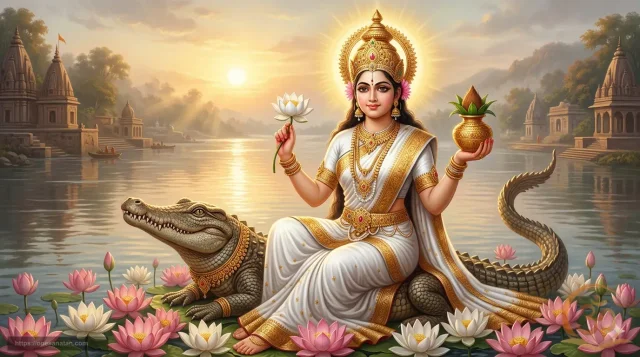
Shri Ganga Chalisa Complete Lyrics & Meaning in Hindi & English
{
"english": "<p>Welcome to <strong>OneSanatan.com</strong> as we explore the profound spiritual essence of the <em>Shri Ganga Chalisa</em>, a devotional hymn dedicated to Goddess Ganga, the celestial river embodied as the mother of liberation. This revered stotra belongs to the popular <em>Chalisa</em> genre of vernacular devotional literature, which flourished across North India during the medieval and post-medieval periods as part of the broader <em>Bhakti Movement</em>. While the specific authorship of the <em>Ganga Chalisa</em> is traditionally attributed to anonymous pious poets and saintly practitioners rather than a single historically documented sage, its composition draws deeply from ancient Puranic narratives found in texts such as the <em>Mahabharata</em>, <em>Valmiki Ramayana</em>, and various <em>Mahapuranas</em> like the <em>Skanda Purana</em> and <em>Padma Purana</em>. These foundational scriptures recount the epic descent of Ganga from the heavenly realms, arrested by Lord Shiva in His matted locks (<em>Jata Shankari</em>) and channeled to the earth through the fierce penance of King Bhagiratha to redeem his ancestors.</p><p>From a literary perspective, the text is structured in the accessible vernacular medium, utilizing standard metric frameworks such as <em>Chaupai</em> and occasional <em>Doha</em> forms that make it naturally rhythmic and easy for congregational or solitary chanting. Written originally in regional <em>Braja Bhasha</em> or early vernacular Hindi dialects, the hymn employs a direct and fervent emotional vocabulary—addressing the deity as <em>Patit Pavani</em> (purifier of the fallen) and <em>Tripathaga</em> (flowing through three worlds). The <em>Chhandas</em> relies on a consistent syllable count and end-rhyme scheme designed for musical recitation (<em>Sangeetatmaka</em>), allowing the devotee to internalize the flowing cadence of the river itself through vocal repetition. This poetic structure ensures that the sacred geography of the river, from Gomukh to Ganga Sagar, is mirrored in the rhythmic waves of the verses.</p><p>Traditionally, the recitation of the <em>Shri Ganga Chalisa</em> forms an integral part of daily morning devotions (<em>Nitya Puja</em>) and specialized riverbank rituals (<em>Ganga Aarti</em>). While it can be chanted at any time to invoke purity and calm, it holds heightened significance during sacred periods such as <em>Ganga Dashahara</em>, <em>Makara Sankranti</em>, <em>Kartik Purnima</em>, and during the holy months of the <em>Kumbh Mela</em>. Pious practitioners often recite the Chalisa during Monday worship alongside prayers to Lord Shiva, acknowledging the inextricable bond between the river and the ascetic deity. In standard domestic or temple ritual sequences, the hymn is typically chanted following the offering of lamps (<em>Deepdaan</em>), incense, and sacred water, serving as a meditative bridge between the worshipper and the divine flowing grace of the Mother.</p><p>The spiritual significance of the hymn rests upon the transformative power of <em>Shraddha</em> (faith) and the psychological purification facilitated by contemplating the divine attributes of Ganga. Achars and traditional commentators emphasize that the sacred waters operate on both a physical and a subtle metaphysical plane; bathing in or remembering the river cleanses the subtle body of karmic impurities (<em>Papahara</em>). The verses suggest that merely surrendering to the cooling currents of her grace allows the seeker to cross the turbulent ocean of worldly existence (<em>Bhava Samudra</em>). The editorial verification of this text aligns with standard vernacular devotional collections published by traditional publishing houses such as Gita Press, Gorakhpur, which preserve these forty-verse compositions as vital components of everyday Hindu devotional practice without claiming ancient Vedic authorship.</p><p>Textually, the opening verses invoke the immediate presence of the mother river: <em>"Jai Ganga Mata, Pavan Jala Dhara..."</em> praising her eternal residence near the lotus of Brahma and her identity as the ascetic achievement of Bhagiratha. The poetic progression moves from cosmic reverence to intimate supplication, asking the deity to guard the devotee's moral integrity and grant liberation from existential sorrow. The spiritual interpretation reminds the seeker that Ganga is not merely a geographical river flowing through the Gangetic plains, but an inner current of divine consciousness that washes away mental impurities, ego, and ignorance. By engaging with these lyrics on <strong>OneSanatan.com</strong>, readers are invited to anchor their daily spiritual discipline in the timeless purity of Sanatan Dharma.</p>",
"hindi": "<p><strong>OneSanatan.com</strong> के इस विशेष संपादकीय में आपका स्वागत है। आज हम माँ गंगा को समर्पित अत्यंत पवित्र एवं लोकप्रिय स्तुति <em>श्री गंगा चालीसा</em> के आध्यात्मिक मर्म और साहित्यिक स्वरूप पर विचार कर रहे हैं। चालीसा परंपरा उत्तर भारत के भक्ति आंदोलन के कालखंड की एक अत्यंत प्रभावशाली विधा रही है, जिसमें लोक-भाषा के माध्यम से इष्ट देव की महिमा का गुणगान किया जाता है। यद्यपि <em>गंगा चालीसा</em> के रचयिता के संबंध में कोई एक निश्चित ऐतिहासिक प्रमाण उपलब्ध नहीं है, तथापि यह रचना सदियों से लोक-आस्था और संत परंपरा के माध्यम से मौखिक एवं लिखित रूप में प्रवाहित होती रही है। इसका वैचारिक और कथात्मक आधार पौराणिक ग्रंथों जैसे <em>वाल्मीकि रामायण</em>, <em>महाभारत</em>, <em>स्कन्द पुराण</em> और <em>पद्म पुराण</em> की उन कथाओं पर आधारित है, जिनमें भगीरथ के कठोर तप के परिणामस्वरूप स्वर्ग से पृथ्वी पर भगवती गंगा के अवतरण का सविस्तार वर्णन मिलता है।</p><p>साहित्यिक दृष्टि से यह रचना लोक-सुलभ छंदबद्ध शैली में रची गई है, जिसमें चौपाइयों और ड्योंढ़ियों का सुंदर संयोजन मिलता है। मूलतः ब्रजभाषा और प्रांतीय हिंदी बोलियों के प्रभाव वाली यह रचना संगीतात्मकता से परिपूर्ण है, जिससे इसका उच्चारण अत्यंत सहज हो जाता है। इसमें प्रयुक्त शब्दावली जैसे <em>पतित पावनी</em>, <em>त्रिपथगा</em> और <em>जटा शंकरी</em> देवी गंगा के उन विशेष रूपों को उजागर करती है जो उनकी महानता और विराटता को दर्शाते हैं। छंद की लय ऐसी है कि पाठक के मन में कलकल करती पावन जलधारा का आभास होने लगता है। शास्त्रीय दृष्टि से यह स्तोत्र सरल होने के बावजूद गंभीर दार्शनिक सत्यों को जन-जन तक पहुँचाने में पूर्णतः समर्थ है, क्योंकि इसमें साधना, तपस्या और मोक्ष के मार्ग को अत्यंत सहजता से समझाया गया है.</p><p>पारंपरिक अनुष्ठानिक संदर्भ में <em>श्री गंगा चालीसा</em> का पाठ नित्य पूजा के क्रम में प्रातःकाल अथवा संध्या वंदन के समय किया जाता है। विशेष पर्वों जैसे <em>गंगा दशहरा</em>, <em>मकर संक्रांति</em>, <em>कार्तिक पूर्णिमा</em> और <em>कुंभ महापर्व</em> के अवसरों पर इसका पाठ विशेष रूप से फलदायी माना जाता है। नदी के तट पर होने वाली संध्या आरती के उपरांत श्रद्धालु इस चालीसा का सामूहिक पाठ करते हैं। पूजा की क्रमबद्धता में इसे सामान्यतः भगवान शिव के स्मरण के पश्चात या दीपदान और आचमन के उपरांत सम्मिलित किया जाता है, क्योंकि शिव और गंगा का संबंध भारतीय सनातन संस्कृति में अटूट माना गया है। नियमित पाठ से मानसिक शांति और सात्विक ऊर्जा की प्राप्ति होती है.</p><p>आध्यात्मिक महत्व की दृष्टि से यह चालीसा भक्त के अंतःकरण को शुद्ध करने वाली एक महान साधना है। पारंपरिक आचार्यों का मानना है कि गंगा केवल एक भौतिक नदी नहीं, बल्कि मोक्षदायिनी चेतना का प्रवाह हैं। इन पंक्तियों का स्मरण करने मात्र से भवसागर से तरने की प्रेरणा मिलती है। गीता प्रेस, गोरखपुर जैसे प्रतिष्ठित संस्थानों द्वारा प्रकाशित सनातन धार्मिक पुस्तकों में इस प्रकार की चालीसाओं को दैनिक उपासना का प्रमुख अंग माना गया है, जो बिना किसी जटिल दार्शनिक उलझन के सीधे हृदय को स्पर्ष करती हैं। यह पाठ साधक को अहंकार और मानसिक अशुद्धियों से मुक्त कर आत्मिक शांति की ओर अग्रसर करता है.</p><p>इस चालीसा का प्रारंभ इन पावन पंक्तियों से होता है—<em>"जय गंगा माता। पावन जल धारा।। पतित पावनी ख्याता। ब्रह्मा कमल निवासा।।"</em> जो सीधे देवी के दिव्य स्वरूप का आह्वान करती हैं। इसके उपरांत भगीरथ की तपस्या और भगवान शिव की जटाओं में उनके निवास का स्मरण करते हुए भक्त अपनी अल्पावस्था और कमियों के लिए क्षमा मांगते हुए शरण की कामना करता है। अंतिम पंक्तियों में दास द्वारा अपनी दीनता प्रकट करते हुए माँ की अहेतु कृपा की याचना की गई है। <strong>OneSanatan.com</strong> के माध्यम से हमारा उद्देश्य इन पावन रचनाओं के वास्तविक मर्म को आप तक पहुँचाना है, जिससे आपकी आध्यात्मिक यात्रा निरंतर और अधिक सुदृढ़ हो सके।</p>"
}