Shri Brahma Chalisa Lyrics (Full) + Meaning in Hindi & English
{
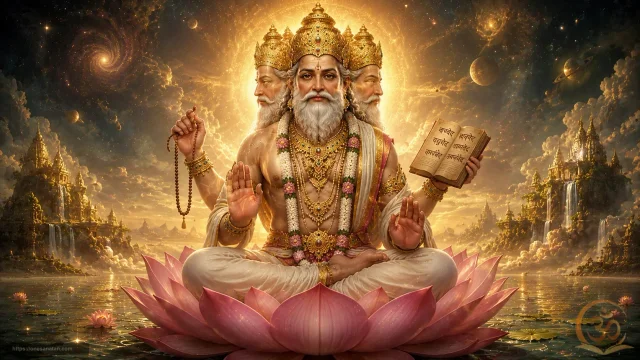
"english": "<p>Welcome to <strong>OneSanatan.com</strong>. In the vast tapestry of Sanatan Dharma, while temples dedicated specifically to Lord Brahma are rare, his presence as the foundational <em>Srishti Karta</em> (Creator of the Universe) remains eternally paramount. The <em>Shri Brahma Chalisa</em> stands as a revered devotional composition dedicated to the supreme architect of the cosmos. Traditionally preserved within the oral and regional streams of stotra literature, stotras and chalisas dedicated to the Trimurti deities are often ascribed to anonymous bhaktas, saintly acharyas, or integrated into modern devotional compilations popularised by traditional publishing houses across northern India during the late 19th and 20th centuries. While specific historical inscriptions or ancient palm-leaf manuscripts naming a singular original author for this exact Chalisa remain unverified, its deep roots lie within the Puranic traditions, particularly texts like the <em>Brahma Purana</em> and <em>Matsya Purana</em>, which elaborate upon Brahma's cosmic manifestation from the primordial lotus springing from Lord Vishnu's navel.</p><p>From a literary and structural perspective, this devotional text follows the classic <em>Chalisa</em> format, traditionally comprising forty verse lines preceded and followed by introductory and concluding couplets (<em>dohas</em>). Composed primarily in popular vernacular metres akin to <em>Chaupai</em> and <em>Doha</em>, the language of the Chalisa bridges classical Sanskritised devotional vocabulary with accessible Brajbhasha and Khariboli idioms, making it easily memorable for everyday practitioners. The rhythm of the metre—steady, measured, and flowing—allows the devotee to internalise the praises of the Lord effortlessly. The opening invocation immediately establishes His supreme cosmic identity: <em>"Jai Jai Jai Brahma Bhagwana, Srijan ke tum ho aadi vidhana"</em> (Victory to Lord Brahma, you are the primeval ordinance of creation).</p><p>In terms of traditional recitation context, the <em>Shri Brahma Chalisa</em> is frequently integrated into daily morning prayers (<em>Nitya Puja</em>), particularly by seekers desiring enhanced intellect, memory, and academic or spiritual concentration. While any day is auspicious for chanting the glories of the Creator, Thursdays and special festive occasions dedicated to knowledge and creation, such as <em>Vasant Panchami</em> (Saraswati Puja) and <em>Brahma Jayanti</em>, are considered highly propitious for starting a regular <em>Anushthan</em> (disciplined recitation practice). During a standard puja sequence, the recitation follows the offering of incense, lamps, and flowers to an image or mental depiction of the four-headed deity seated upon the white swan (<em>Hamsa Vahana</em>), acknowledging Him as the dispenser of supreme wisdom and the embodiment of the sacred Vedas.</p><p>The spiritual significance of this text centres on the awakening of <em>Buddhi</em> (intellect) and <em>Viveka</em> (discrimination). As the presiding deity of knowledge, creator of the four Vedas, and the source of all cosmic intelligence, invoking Lord Brahma helps dispel the darkness of ignorance (<em>timir</em>) that clouds the human mind. Traditional belief holds that regular recitation grants the <em>amita</em> (boundless) fruits of wisdom, purity of thought, and ultimately guides the sincere seeker toward higher spiritual realisations, culminating in liberation. Achéris and spiritual preceptors remind devotees that worshipping the Creator is not merely seeking material boons, but recognising the divine spark of creativity and duty inherent within every living being as fashioned by the primeval father of the universe.</p><p>As part of our commitment to authentic scriptural presentation at <strong>OneSanatan.com</strong>, our editorial desk notes that while comprehensive critical editions of major Puranic texts are widely catalogued by institutions such as Gita Press Gorakhpur and Chaukhamba Sanskrit Series, independent vernacular chalisas like the <em>Shri Brahma Chalisa</em> typically circulate through traditional prayer guides and popular devotional anthologies rather than ancient critical apparatuses. Therefore, devotees are encouraged to approach this hymn with traditional shraddha, focusing on its meditative depth and philosophical resonance as an aid to spiritual awakening and intellectual clarity.</p><p>Textually, the Chalisa serves as a profound meditation on the orderly nature of existence. By praising Brahma's four faces (<em>char vadan</em>) looking in all directions, the text symbolises omniscience and the universal reach of divine wisdom. The verses remind the practitioner that the material world is not a chaotic accident, but a conscious, intentional creation requiring reverence, intellectual discipline, and moral responsibility. Through humble supplication—<em>"Das tumhara charno mein aaya, apni daya ki karo ab chhaya"</em>—the devotee surrenders individual ego at the feet of the universal Creator, seeking shelter under His infinite grace.</p>",
"hindi": "<p><strong>OneSanatan.com</strong> पर आपका स्वागत है। सनातन धर्म की विशाल परंपरा में यद्यपि भगवान ब्रह्मा के स्वतंत्र मंदिर दुर्लभ हैं, तथापि सृष्टि के रचयिता जगतपिता के रूप में उनकी महिमा सर्वोपरि है। <em>श्री ब्रह्मा चालीसा</em> ब्रह्मांड के इस आदि शिल्पी को समर्पित एक अत्यंत श्रद्धापूर्ण और पावन भक्ति रचना है। त्रिमूर्ति देवताओं को समर्पित ऐसी चालीसाएं और स्तोत्र परंपरा में मौखिक रूप से अथवा संत-महात्माओं द्वारा रचित संग्रहों के माध्यम से पीढ़ी-दर-पीढ़ी प्रवाहित होते रहे हैं। हालांकि इस विशिष्ट चालीसा के किसी एक ऐतिहासिक रचयिता या प्राचीन पांडुलिपि का अकाट्य ऐतिहासिक प्रमाण अभी तक अनुपलब्ध है, तथापि इसके मूल स्रोत पुराणों, विशेषकर <em>ब्रह्म पुराण</em> और <em>मत्स्य पुराण</em> की कथाओं में निहित हैं, जहाँ भगवान विष्णु की नाभि से उत्पन्न कमल पर ब्रह्मा जी के प्राकट्य और सृष्टि रचना का विस्तृत वर्णन मिलता है।</p><p>साहित्यिक संरचना की दृष्टि से यह कृति पारंपरिक चालीसा विधा का अनुसरण करती है, जिसमें सामान्यतः चालीस पंक्तियाँ होती हैं और उनके साथ आरंभ तथा अंत में दोहे या श्लोक जुड़े होते हैं। यह रचना चौपाई और दोहा जैसे लोकप्रिय छंदों के अनुकूल प्रवाह में रसीली एवं सुगम भाषा में रची गई है। इसकी शब्दावली संस्कृतनिष्ठ संतों की वाणी और लोक-भाषा का एक सुंदर समन्वय प्रस्तुत करती है, जिससे साधक इसे सरलता से कंठस्थ कर सके। इसके प्रारंभिक बोल ही भगवान के विराट स्वरूप को उजागर करते हैं—<em>"जय जय जय ब्रह्मा भगवाना, सृजन के तुम हो आदि विधाना"</em>।</p><p>पारंपरिक अनुष्ठान और पाठ की दृष्टि से, <em>श्री ब्रह्मा चालीसा</em> का पाठ नित्य पूजा के अंतर्गत प्रातःकाल करना विशेष रूप से फलदायी माना जाता है। जो साधक अपनी बुद्धि, विवेक, स्मरण शक्ति और विद्या में वृद्धि की कामना रखते हैं, वे इस पाठ को अपने दैनिक नियम में सम्मिलित करते हैं। यद्यपि भगवान ब्रह्मा की आराधना किसी भी दिन की जा सकती है, तथापि ज्ञान और सृजन के पर्व जैसे <em>वसंत पंचमी</em> (सरस्वती पूजा) और ब्रह्मा जयंती के पावन अवसरों पर इसका नियमित पाठ और अनुष्ठान अत्यंत शुभ माना जाता है। सामान्य पूजा क्रम में दीप, धूप, और पुष्प अर्पित करने के पश्चात हंस वाहन पर आसीन चतुर्मुखी ब्रह्मा जी का ध्यान करते हुए इस चालीसा का सस्वर पाठ किया जाता है।</p><p>इस चालीसा का आध्यात्मिक महत्व मुख्य रूप से बुद्धि, विवेक और अज्ञान के निवारण से जुड़ा है। वेदों के आधिपत्य और ज्ञान के स्रोत के रूप में भगवान ब्रह्मा का स्मरण करने से मानव मन के अंधकार (तिमिर) का नाश होता है। पारंपरिक विश्वास है कि जो भक्त नित्य भाव से इस चालीसा का पाठ करता है, उसे विद्या और बुद्धि का अमित फल प्राप्त होता है तथा अंत समय में ब्रह्मलोक की प्राप्ति होती है। आचार्यों का यह संदेश है कि सृष्टि कर्ता की आराधना का उद्देश्य केवल भौतिक कामनाओं की पूर्ति नहीं, अपितु हर जीव में समाहित उस दिव्य सृजनात्मक ऊर्जा और कर्तव्य-बोध को पहचानना है जो जगतपिता द्वारा हमें प्राप्त हुआ है।</p><p><strong>OneSanatan.com</strong> के संपादकीय विभाग द्वारा यह स्पष्ट किया जाता है कि गीता प्रेस गोरखपुर अथवा चौखंबा संस्कृत संस्थान जैसी प्रतिष्ठित संस्थाओं द्वारा मुख्य पुराण ग्रंथों के प्रामाणिक संस्करण प्रकाशित किए जाते हैं, वहीं इस प्रकार की स्वतंत्र लोक-चालीसाएं मुख्य रूप से पारंपरिक भक्ति ग्रंथों और पूजा संग्रहों में सुरक्षित पाई जाती हैं। अतः साधकों से अनुरोध है कि वे इस पवित्र स्तुति को अपनी श्रद्धा, आंतरिक शांति और मानसिक एकाग्रता के संवर्धन हेतु अपनाएं।</p><p>यह पाठ साधक को ब्रह्मांड की सुव्यवस्थित व्यवस्था से जोड़ता है। ब्रह्मा जी के चार मुख (चार वदन) संपूर्ण दिशाओं में दृष्टि और सर्वव्यापक ज्ञान के प्रतीक हैं। चालीसा की पंक्तियाँ यह स्मरण कराती हैं कि यह संसार किसी संयोग का परिणाम नहीं, बल्कि एक सुचिंतित और पवित्र सृष्टि है जिसके संचालन में अनुशासन और धर्म का महत्वपूर्ण स्थान है। अंत में दीन भाव से की गई प्रार्थना—<em>"दास तुम्हारा चरणों में आया, अपनी दया की करो अब छाया"</em>—साधक के अहंकार को समाप्त कर जगतपिता की शरण में पूर्ण समर्पण का संदेश देती है।</p>"
}