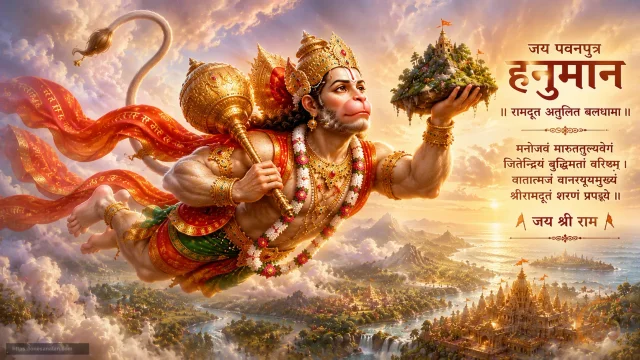
Hanuman Chalisa (हनुमान चालीसा) Lyrics with Hindi & English Meaning
{
"english": "<p>Welcome to <strong>OneSanatan.com</strong>. The <em>Hanuman Chalisa</em> is one of the most revered devotional hymns in the Sanatan tradition, traditionally attributed to the revered 16th-century saint and poet Goswami Tulsidas. Rooted in the bhakti movement of medieval India, this composition emerged during a period when vernacular poetry became a powerful vehicle for spiritual awakening, bringing profound scriptural truths directly to the common people. While the text is not a direct part of classical Vedic or Puranic compendiums, its narratives draw heavily from Valmiki's <em>Ramayana</em>, the <em>Adhyatma Ramayana</em>, and oral traditions celebrating the infinite glories of Lord Hanuman.</p>\n\n<p>Literarily, the hymn is composed in the <em>Awadhi</em> language, a prominent regional dialect of Hindi utilized masterfully by Tulsidas in works such as the <em>Ramcharitmanas</em>. The structural form of the <em>Hanuman Chalisa</em> consists of an opening set of introductory couplets (dohas) followed by forty (chalisa) metric verses written in the <em>Chaupaii</em> metre, concluding with a final doha. This specific poetic structure provides a rhythmic flow that is easily memorized, recited, and chanted by practitioners of all ages, maintaining the precise prosodic rules characteristic of classical medieval poetic expression.</p>\n\n<p>In traditional practice, the recitation of the <em>Hanuman Chalisa</em> holds a central place in daily personal worship and collective temple gatherings. It is most commonly recited on Tuesdays and Saturdays—days traditionally dedicated to Lord Hanuman—as well as during major festivals such as Hanuman Jayanti. Practitioners often incorporate this hymn into their morning or evening <em>puja</em> sequence, frequently preceding it with an invocation to Lord Ganesha and Lord Rama, and concluding with formal prayers, an <em>aarti</em>, and the offering of sweets like <em>laddus</em> alongside red vermilion (sindoor).</p>\n\n<p>From a spiritual perspective, the hymn is understood by acharyas and devotees to be a powerful invocation of fearlessness, inner strength, and unwavering devotion. According to traditional commentary, regular recitation of the Chalisa purifies the mind, dispels mental agitation, and shields the practitioner from negative influences and distress. Prominent spiritual teachers emphasize that the verses do not merely praise Lord Hanuman's legendary physical strength and loyalty to Lord Rama, but also serve as a profound psychological and spiritual tool to awaken divine qualities—such as intellect (<em>buddhi</em>), discrimination (<em>viveka</em>), and steadfast devotion (<em>bhakti</em>)—within the seeker.</p>\n\n<p>Editorial verification of the text relies primarily on established publishing traditions, most notably the widely consulted editions produced by Gita Press, Gorakhpur, and standard manuscript collections preserved in northern scholarly institutions. These traditional editions ensure the preservation of the authentic verse order, vocabulary, and phonetic integrity of the Awadhi text without unauthorized modern alterations, providing readers with an uncorrupted and reliable devotional resource.</p>\n\n<p>In summary, the <em>Hanuman Chalisa</em> serves as a concentrated spiritual manual for cultivating complete surrender, humility, and heroic resilience. By meditating upon the opening verses—starting with <em>\"श्रीगुरु चरन सरोज रज निज मनु मुकुर सुधारि\"</em> and moving through the dynamic descriptions of Lord Hanuman's divine attributes—the practitioner aligns their consciousness with the supreme grace of Lord Rama, ultimately conquering the internal obstacles of fear, ignorance, and ego.</p>",
"hindi": "<p><strong>OneSanatan.com</strong> पर आपका स्वागत है। <em>हनुमान चालीसा</em> सनातन परंपरा के सबसे अधिक पूज्यता प्राप्त भक्ति-ग्रंथों में से एक है, जिसकी रचना पारंपरिक रूप से सोलहवीं शताब्दी के महान संत एवं कवि गोस्वामी तुलसीदास जी से जुड़ी हुई है। मध्यकालीन भारत के भक्ति आंदोलन में जन्मी यह रचना उस काल की देन है जब लोक-भाषाओं को आध्यात्मिक जागरण का माध्यम बनाया गया, जिससे शास्त्र-सम्मत ज्ञान आम जनमानस तक सहज रूप से पहुँच सका। यद्यपि यह ग्रंथ सीधे तौर पर किसी प्राचीन वैदिक या पौराणिक संहिता का भाग नहीं है, तथापि इसके प्रसंग महर्षि वाल्मीकि के <em>रामायण</em>, <em>अध्यात्म रामायण</em> और हनुमान जी की महिमा से जुड़ी लोक-परंपराओं पर आधारित हैं।</p>\n\n<p>साहित्यिक दृष्टि से यह स्तुति <em>अवधि</em> भाषा में रचित है, जो हिंदी की एक प्रमुख क्षेत्रीय बोली है और जिसका सुंदर प्रयोग तुलसीदास जी ने <em>रामचरितमानस</em> में भी किया है। <em>हनुमान चालीसा</em> की संरचना में प्रारंभ में दो दोहे, तत्पश्चात चालीसा यानी चालीस चौपाइयां और अंत में एक समापन दोहा आता है। यह विशिष्ट पद्य-संरचना इसे एक ऐसा लयबद्ध प्रवाह प्रदान करती है जिसे किसी भी आयु के साधक द्वारा सरलता से कंठस्थ और सस्वर पाठ किया जा सकता है, जो मध्यकालीन काव्य के शास्त्रीय नियमों का पूर्ण पालन करती है।</p>\n\n<p>पारंपरिक साधना पद्धति में <em>हनुमान चालीसा</em> का पाठ दैनिक व्यक्तिगत उपासना और सामूहिक मंदिर आयोजनों का एक अनिवार्य अंग है। इसे विशेष रूप से मंगलवार और शनिवार के दिन—जो हनुमान जी को समर्पित हैं—तथा हनुमान जयन्ती जैसे पर्वों पर अत्यंत श्रद्धा के साथ पढ़ा जाता है। साधकगण सामान्यतः अपनी सुबह या संध्या की <em>पूजा</em> पद्धति में गणेश जी और श्री राम के स्मरण के उपरांत इसका पाठ करते हैं, जिसका समापन आरती, प्रणाम और सिंदूर तथा लड्डुओं के भोग के साथ होता है।</p>\n\n<p>आध्यात्मिक दृष्टिकोण से आचार्यों और भक्तों का मानना है कि यह स्तुति निर्भयता, आंतरिक शक्ति और अगाध भक्ति का एक सशक्त आवाहन है। पारंपरिक व्याख्याओं के अनुसार, चालीसा का नियमित पाठ मन को शुद्ध करता है, मानसिक संताप को दूर करता है और साधक को नकारात्मक ऊर्जा एवं संकटों से सुरक्षित रखता है। प्रमुख आध्यात्मिक गुरुओं का यह मत है कि इसके छंद केवल हनुमान जी के शारीरिक बल और श्री राम के प्रति उनकी निष्ठा का ही गुणगान नहीं करते, बल्कि साधक के भीतर बुद्धि, विवेक और भक्ति जैसे दैवीय गुणों को जागृत करने का साधन भी हैं।</p>\n\n<p>इस पाठ की संपादकीय प्रमाणिकता मुख्य रूप से गीताप्रेस, गोरखपुर द्वारा प्रकाशित अधिकृत संस्करणों और उत्तर भारत के पारंपरिक पुस्तकालयों में सुरक्षित पाण्डुलिपियों पर आधारित है। ये पारंपरिक प्रकाशन संस्थान अवधि पाठ की मूल शब्दावली, क्रम और उच्चारण की शुद्धता को बिना किसी आधुनिक परिवर्तन के सुरक्षित रखते हैं, जिससे पाठकों को एक विश्वसनीय और शुद्ध सामग्री प्राप्त होती है।</p>\n\n<p>संक्षेप में कहें तो, <em>हनुमान चालीसा</em> पूर्ण समर्पण, नम्रता और वीरतापूर्ण सहनशीलता को विकसित करने का एक सारगर्भित आध्यात्मिक मार्गदर्शक है। इसके आरंभिक वचनों—जैसे <em>\"श्रीगुरु चरन सरोज रज निज मनु मुकुर सुधारि\"</em>—तथा हनुमान जी के दिव्य गुणों के गतिशील वर्णनों पर ध्यान केंद्रित करके, साधक अपनी चेतना को श्री राम की कृपा से जोड़ता है और अंततः भय, अज्ञान तथा अहंकार जैसी आंतरिक बाधाओं पर विजय प्राप्त करता है।</p>"
}