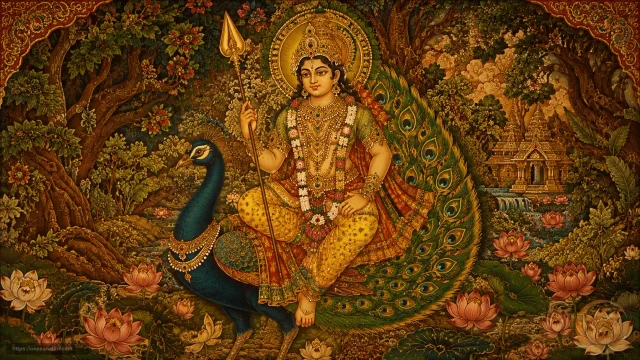
Shri Kartikeya Chalisa Full Lyrics with Hindi & English Meaning
{
"english": "<p>Welcome to <strong>OneSanatan.com</strong>. In the vast tapestry of Sanatan Dharma, the worship of Lord Skanda, <em>Kumara</em>, or Kartikeya occupies a position of supreme valor and divine wisdom. The <em>Shri Kartikeya Chalisa</em> is a deeply revered devotional composition dedicated to the divine general of the celestial forces. While traditional <em>Stotras</em> and hymns dedicated to Skanda find extensive mention in the <em>Skanda Purana</em> and various Agamic texts, vernacular <em>Chalisas</em> emerged later as accessible devotional poetry to make profound theological concepts available to the common devotee. Rooted in the rich bhakti traditions of Northern and Central India, the *Chalisa* format captures the essence of classical puranic narratives within forty lucid verses, bridging the gap between intricate Sanskrit lore and heartfelt vernacular prayer.</p>\n<p>From a literary perspective, the text is composed in traditional Awadhi or Braj-influenced vernacular idioms, predominantly utilizing popular devotional metres such as <em>Chaupai</em> and <em>Doha</em>. This metric structure provides a rhythmic flow that naturally aids memorization and congregational chanting. The language remains accessible yet carries profound metaphysical weight, invoking the divine attributes of the deity through evocative imagery—from his peacock mount (<em>mayura vahana</em>) to his six-headed form (<em>Shadanan</em>). The verses celebrate his role as the vanquisher of the demon Tarakasura and the valiant commander of Shiva's army, establishing a poetic cadence that elevates the mind of the practitioner toward courage, clarity, and spiritual fortitude.</p>\n<p>Traditionally, the recitation of the <em>Kartikeya Chalisa</em> is undertaken during auspicious temporal windows dedicated to Lord Skanda. Tuesdays and Sasthi tithis (the sixth day of the waxing moon, known as Skanda Sasthi) are considered exceptionally potent for his worship. Devotees generally begin their daily puja by establishing a clean sanctum, offering fresh water, red flowers, and incense to an image or yantra of Lord Kartikeya, followed by the systematic recitation of the <em>Chalisa</em>. This practice is often integrated into broader rituals honoring Shiva and Devi, acknowledging Kartikeya’s divine lineage as the son of Mahadeva and Goddess Parvati, nursed by the Krittikas.</p>\n<p>Spiritually, chanting this hymn is believed to awaken inner courage, mental discipline, and spiritual discernment, aligning the devotee with the divine energy of <em>Jnana Shakti</em> (the power of knowledge). Achievers and seekers invoke him to overcome internal obstacles such as fear, hesitation, and ignorance. According to traditional understanding, regular recitation brings mental peace, protection from adversities, and harmonious growth within the household. While definitive historical records pinning down the exact individual author of this specific vernacular <em>Chalisa</em> remain obscure, standard devotional compendiums published by traditional publishing houses such as Gita Press preserve these forty verses as part of the broader living heritage of stotra literature.</p>\n<p>Editorial verification of vernacular stotras involves consulting standard traditional anthologies to ensure fidelity in poetic structure and devotional integrity. While critical historical-philological data for minor vernacular <em>Chalisas</em> is often scarce compared to classical Sanskrit epics, texts verified through traditional compilations offer a reliable window into folk-bhakti expressions. Readers are encouraged to approach these compositions with faith, allowing the rhythmic cadence and traditional imagery to purify the mind and centre the consciousness upon the higher ideals embodied by the divine general.</p>\n<p>Ultimately, the <em>Shri Kartikeya Chalisa</em> serves as a powerful spiritual bridge between the human soul and the transcendent courage of Lord Skanda. By meditating on his luminous form, his defeat of Tarakasura, and his grace as a protector of righteousness, the devotee cultivates fearlessness and steadfast devotion. As expressed in the closing verses, sincere prayer to the Lord of the celestial armies removes life's tribulations and instills divine grace, making this hymn an invaluable companion in the daily spiritual journey of every sincere seeker.</p>",
"hindi": "<p><strong>OneSanatan.com</strong> पर आपका स्वागत है। सनातन धर्म की परंपरा में भगवान कार्तिकेय, जिन्हें स्कन्द, कुमार और षडानन के नाम से भी जाना जाता है, वीरता, ज्ञान और दिव्य सेनापतित्व के प्रतीक हैं। <em>श्री कार्तिकेय चालीसा</em> भगवान स्कन्द की महिमा का गुणगान करने वाली एक अत्यंत लोकप्रिय और भावपूर्ण भक्ति रचना है। यद्यपि भगवान कार्तिकेय से जुड़े विस्तृत स्तोत्र और आख्यान <em>स्कन्द पुराण</em> तथा विभिन्न आगम ग्रंथों में प्रचुर मात्रा में मिलते हैं, तथापि लोक-कल्याण और सहज उपासना के लिए रची गई ये चालीसाएं उत्तर भारत की समृद्ध संत-साहित्य परंपरा का हिस्सा हैं। यह ग्रंथ संस्कृत के गूढ़ पौराणिक तत्वों को सरल और सुबोध लोक-भाषा के माध्यम से जन-जन तक पहुँचाने का कार्य करता है।</p>\n<p>साहित्यिक दृष्टिकोण से इस रचना में पारंपरिक चौपाइयों और दोहों का सुंदर प्रयोग किया गया है, जो इसकी लयबद्धता को बढ़ाते हैं। इसकी भाषा जनसामान्य के हृदय को स्पर्श करने वाली व्रज या अवधी मिश्रित लोकभाषा है, जिसमें मयूर वाहन, षडानन और तारकासुर वध जैसी पौराणिक कथाओं का जीवंत चित्रण मिलता है। चालीसा के छंदों में भगवान कार्तिकेय के स्वरूप का ऐसा सजीव वर्णन किया गया है जो साधक के मन में भक्ति के साथ-साथ वीरता और आत्मबल का संचार करता है। इसका प्रत्येक पद प्रभु के पराक्रम और उनकी कृपा का स्मरण कराता है।</p>\n<p>पारंपरिक पूजा पद्धति के अनुसार, <em>कार्तिकेय चालीसा</em> का पाठ विशेष तिथियों और दिवसों पर अत्यंत फलदायी माना गया है। प्रति मंगलवार और प्रत्येक शुक्ल पक्ष की षष्ठी तिथि (स्कन्द षष्ठी) को भगवान कार्तिकेय की उपासना के लिए श्रेष्ठ समय माना जाता है। साधक प्रातः स्नान कर स्वच्छ वस्त्र धारण कर भगवान शिव और माता पार्वती के साथ स्कन्द भगवान का ध्यान करते हुए दीप प्रज्वलित कर इस चालीसा का पाठ करते हैं। इस अनुष्ठान से मन शांत होता है और जीवन की बाधाएं दूर होती हैं।</p>\n<p>ध्यात्मिक दृष्टिकोण से इस स्तोत्र का पाठ करने से साधक को ज्ञान, शक्ति और साहस की प्राप्ति होती है। आचार्य परंपरा के अनुसार, भगवान कार्तिकेय 'ज्ञान शक्ति' के अधिष्ठाता हैं, अतः उनकी स्तुति करने से बुद्धि का विकास होता है और आंतरिक भय तथा अज्ञान का नाश होता है। यद्यपि इस विशिष्ट लोक-चालीसा के मूल रचयिता का कोई अकाट्य ऐतिहासिक प्रमाण उपलब्ध नहीं है, तथापि गीताप्रेस गोरखपुर जैसे पारंपरिक प्रकाशन संस्थानों द्वारा समय-समय पर प्रकाशित संकलनों में ऐसे लोकप्रिय स्तोत्रों को स्थान दिया गया है, जो लोक-आस्था की जीवंत परंपरा को सुरक्षित रखते हैं।</p>\n<p>संपादकीय दृष्टि से, इस प्रकार के ग्रंथों की प्रामाणिकता उनके पारंपरिक संग्रहों और सनातन समाज में उनकी व्यापक स्वीकार्यता पर आधारित होती है। ऐतिहासिक अनुसंधान की दृष्टि से भले ही इन रचनाओं के निर्माण वर्ष पर मतभेद हो सकते हैं, परंतु इनकी आध्यात्मिक और मनोवैज्ञानिक उपयोगिता निर्विवाद है। पाठकों से अनुरोध है कि वे इस पवित्र चालीसा का पाठ पूर्ण श्रद्धा और विश्वास के साथ करें, जिससे जीवन में सकारात्मक ऊर्जा का संचार हो सके।</p>\n<p>संक्षेप में, <em>श्री कार्तिकेय चालीसा</em> भक्त और भगवान के बीच का एक ऐसा सेतु है जो साधक को साधना और वीरता के मार्ग पर अग्रसर करता है। भगवान कार्तिकेय की कृपा से जीवन के संकटों से मुक्ति मिलती है और घर-परिवार में सुख-समृद्धि का वास होता है। इस पवित्र पाठ के माध्यम से साधक अपने अहंकार और दुर्बलताओं का त्याग कर भगवान के चरणों में शरण प्राप्त करता है और परमसत्य की ओर अग्रसर होता है।</p>"
}