Sacred Knowledge Goddess
Dual-Voice
Saraswati Stuti Full Lyrics with Hindi & English Meaning
Explore the full lyrics of Saraswati Stuti Full with Hindi and English meaning. Listen to the audio and understand every line for easy devotion and daily chanting.
Saraswati Stuti
Knowledge Goddess
Wisdom Mantra
Rig Veda
Divine Learning
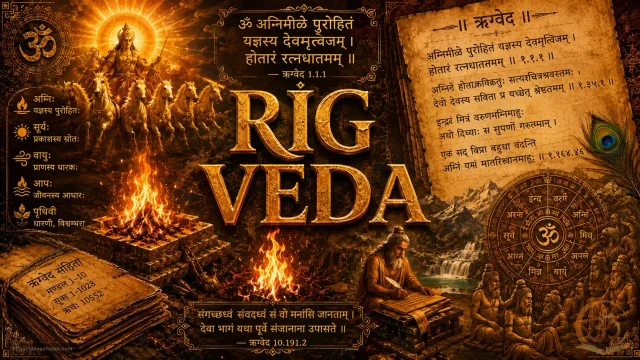
ॐ
हिन्दी सारांश
सरस्वती स्तुति मंत्र ज्ञान, कला और वाणी की देवी सरस्वती माता की महिमा का गुणगान करता है। 'पावका' (पवित्र करने वाली) और 'वाजिनीवती' (बल प्रदान करने वाली) सरस्वती से प्रार्थना करते हुए यह मंत्र बुद्धि, विद्या, और रचनात्मकता प्रदान करता है। यह मानसिक स्पष्टता और वाक्शक्ति बढ़ाता है।
卐
English Summary
The Saraswati Stuti Mantra celebrates the divine river of consciousness as Pavaka (purifier) and Vajinivati (bestower of strength). This ancient hymn awakens the fountain of wisdom within, enhances intellectual clarity, and grants eloquence in speech and creative expression.
Detailed Spiritual Essence
In हिन्दी & English
Detailed Spiritual Essence
OneSanatan.com पर आपका स्वागत है। वैदिक साहित्य के विशाल भंडार में, "पावका नः सरस्वती वाजेभिर्वाजिनीवती। यज्ञं वष्टु धियावसुः॥" से आरंभ होने वाली यह सरस्वती स्तुति ज्ञान और चेतना की देवी के सबसे उत्कृष्ट आवाहनों में से एक है। सनातन धर्म की मौखिक परंपराओं द्वारा संरक्षित यह महान मंत्र सीधे प्राचीन ऋग्वेद से लिया गया है, जो विशेष रूप से ऋग्वेद के प्रथम मंडल, तीसरे सूक्त, दसवें मंत्र (ऋ.सं. 1.3.10) के रूप में विद्यमान है। प्रारंभिक वैदिक काल में रचित यह मंत्र उन प्राचीन द्रष्टा ऋषियों की दिव्य अनुभूति का परिणाम है, जिन्होंने ब्रह्मांडीय बुद्धि को एक पावन, जीवनदायिनी चेतना के रूप में अनुभव किया था। निरंतर मौखिक परंपरा के माध्यम से पीढ़ियों तक प्रसारित यह स्तुति साधकों को वैदिक आध्यात्मिकता की शाश्वत थाती से जोड़ती है।
साहित्यिक दृष्टिकोण से, यह पवित्र मंत्र वैदिक छंदों की प्राचीन संरचना के अंतर्गत आता है, जिसमें ध्वनि के रूपांतरकारी प्रभाव को जागृत करने के लिए सटीक अक्षरीय व्यवस्था का उपयोग किया गया है। प्राचीन और शुद्ध वैदिक संस्कृत में रचित यह स्तुति एक साथ कई स्तरों पर कार्य करती है—यह भौतिक समृद्धि की प्रार्थना, बौद्धिक स्पष्टता की याचिका और उच्च आध्यात्मिक प्राप्ति का द्वार है। इसकी भाषा बिंब-समृद्ध है, जो सरस्वती को केवल एक देवी के रूप में नहीं, अपितु पावका (पवित्र करने वाली) और वाजिनीवती (आध्यात्मिक शक्ति और ऊर्जा से संपन्न) के रूप में चित्रित करती है, जिनकी उपस्थिति प्रत्येक पवित्र कार्य को ऊर्जावान बनाती है।
पारंपरिक रूप से, इस ऋग्वैदिक मंत्र का पाठ दैनिक साधना का एक अनिवार्य अंग है, विशेषकर वसंत पंचमी, बच्चों के विद्यारंभ संस्कार और नवरात्रि के पावन पर्वों पर। साधक और विद्यार्थी सामान्यतः इस मंत्र का उच्चारण प्रातःकाल ब्रह्ममुहूर्त में अथवा अध्ययन, कलात्मक साधना या आध्यात्मिक चिंतन आरंभ करने से पूर्व करते हैं। पूजा की पारंपरिक पद्धति में, मन और वाणी की शुद्धि के लिए इस आह्वान को पूजा के आरंभ में ही प्रस्तुत किया जाता है, ताकि किसी भी सत्कर्म से पूर्व साधक की बुद्धि दिव्य सत्य के साथ संरेखित हो सके।
इस स्तुति का आध्यात्मिक महत्व अत्यंत गहरा है, जिसे आचार्यों और टीकाकारों द्वारा उच्च चेतना को जागृत करने, मानसिक जड़ता को दूर करने और प्रज्ञा प्रदान करने वाले शक्तिशाली माध्यम के रूप में समझा गया है। गीता प्रेस और चौखम्बा प्रकाशन के पारंपरिक वैदिक ग्रंथों में प्रमाणित संदर्भों के अनुसार, वैदिक स्वरूप में सरस्वती का आह्वान मन के सूक्ष्म तंतुओं को शुद्ध करता है। आचार्यगण समझाते हैं कि सरस्वती उस दिव्य प्रवाह का प्रतीक हैं जो साधारण मानव बुद्धि को सूक्ष्म आध्यात्मिक विवेक में रूपांतरित करता है, और साधक को अज्ञान के अंधकार से आत्मसाक्षात्कार के प्रकाश की ओर ले जाता है.
इस मंत्र की विशिष्ट व्याख्या यह है कि यह बाह्य अनुष्ठान को आंतरिक आध्यात्मिक परिवर्तन से जोड़ता है। "पावका नः सरस्वती" वाक्यांश मन को अशुद्धियों से मुक्त करने के लिए दिव्य चेतना के प्रवाह का आह्वान करता है, जबकि "धियावसुः" उच्च बुद्धि और आध्यात्मिक दृष्टि के धन को आकर्षित करता है। OneSanatan.com के इस संपादकीय के माध्यम से, हम साधकों को पूर्ण श्रद्धा के साथ इन शाश्वत वैदिक शब्दों का जप करने के लिए आमंत्रित करते हैं, जिससे माँ सरस्वती की आदिम ऊर्जा आंतरिक स्पष्टता, कलात्मक प्रवीणता और परम ज्ञान को जागृत कर सके।
Welcome to OneSanatan.com. In the vast expanse of Vedic literature, the Saraswati Stuti beginning with "Pavaka nah sarasvati vajebhirvajinivati, yajnam vashtu dhiyavasuh" stands as one of the most sublime invocations of the Goddess of Wisdom. Traditionally preserved within the oral traditions of Sanatana Dharma, this profound hymn originates directly from the ancient Rig Veda, specifically embedded within Mandala 1, Hymn 3, Verse 10 (RV 1.3.10). Composed during the early Vedic period, this mantra reflects the primordial realization of the ancient seers, known as rishis, who perceived the divine cosmic intelligence manifesting as a purifying, life-sustaining stream of consciousness. Passed down through centuries via uninterrupted oral transmission, it anchors seekers in the timeless heritage of Vedic spirituality.
From a literary perspective, this sacred utterance is composed in the classical Vedic poetic form known as Gayatri or closely related ancient metres, utilizing precise syllabic structures designed to harness the transformative power of sound. Written in pristine, archaic Vedic Sanskrit, the hymn operates simultaneously on multiple layers—functioning as a physical prayer for sustenance, a psychological plea for intellectual clarity, and a metaphysical portal to higher realization. The language is rich in evocative imagery, depicting Saraswati not merely as an anthropomorphic deity, but as Pavaka (the purifier) and Vajinivati (possessor of spiritual vigor and bounty), whose presence vitalizes every noble endeavor and sacred ritual.
Traditionally, the recitation of this specific Rig Vedic verse forms an integral part of daily spiritual disciplines, particularly during auspicious occasions such as Vasant Panchami, the beginning of education for children known as Vidyarambha, and throughout the Navaratri festival. Devotees and students typically chant this mantra during the early morning hours, known as Brahma Muhurta, or immediately before commencing studies, artistic pursuits, or spiritual contemplation. In a traditional puja sequence, this invocation is offered at the very commencement of worship to invoke purity of mind and speech, ensuring that the seeker's intellect is properly aligned with divine truth before undertaking any major undertaking.
The spiritual significance of this stuti is immense, traditionally understood by commentators and Acharyas as a powerful catalyst for awakening higher consciousness, eradicating mental inertia, and granting profound eloquence. Renowned traditional textual references, such as those verified in standard editions from Gita Press and traditional Vedic compendiums published by Chaukhamba, emphasize that invoking Saraswati through her Vedic attributes cleanses the subtle channels of the mind. Acharyas explain that Saraswati represents the flow of divine grace that transforms raw human intellect into refined spiritual discernment, leading the seeker from the darkness of ignorance to the illumination of self-realization.
As a text-specific interpretation, this mantra bridges the outer ritual with inner spiritual transformation. The phrase "Pavaka nah sarasvati" calls upon the flowing current of divine awareness to cleanse the mind of impurities, while "dhiyavasuh" invokes the wealth of higher intellect and spiritual vision. Through this editorial exploration on OneSanatan.com, we invite seekers to chant these timeless Vedic words with profound reverence, allowing the primordial energy of Saraswati to awaken inner clarity, artistic mastery, and ultimate wisdom.
Divine Chanting
Saraswati Stuti Full - AI Voice
Sacred AI Recitation
Premium Devotional Experience
ॐ
Sacred Script
पावका नः सरस्वती वाजेभिर्वाजिनीवती।
यज्ञं वष्टु धियावसुः॥
Spiritual Guidance
What is the origin and who is the composer of the Saraswati Stuti found on OneSanatan.com?
The primary verses of the Saraswati Stuti originate from the ancient Rig Veda, specifically dedicated to Goddess Saraswati as both a divine river and the personification of supreme knowledge, speech, and wisdom. While the exact human authorship of these specific Vedic hymns is traditionally attributed to ancient rishis (seers) like Gritsamada, they are considered *apauruṣeya* (not of human agency, but heard directly from cosmic vibrations). Over millennia, these foundational Rigvedic prayers have been compiled and complemented by classical stotras composed by sages like Adi Shankaracharya to aid in daily devotion.
What is the best time and auspicious duration to recite the Saraswati Stuti?
The most auspicious time to recite the Saraswati Stuti is during the early morning hours, specifically *Brahma Muhurta* (roughly 1.5 hours before sunrise), when the mind is naturally calm and receptive. Reciting it during the spring festival of Vasant Panchami, which is dedicated entirely to the Goddess of Learning, holds immense spiritual and educational significance. For daily practice, chanting the stuti consistently for 15 to 20 minutes before starting studies, creative work, or professional tasks yields the best mental focus.
What are the core spiritual and mental benefits of chanting this stuti, according to classical texts?
According to ancient Vedic texts and the Markandeya Purana, sincere recitation of Saraswati Stuti dispels the darkness of ignorance (*tamas*) and purifies the intellect, awakening higher consciousness. Classical scriptures state that invoking her grace helps dissolve speech impediments, enhances memory retention, and fosters profound eloquence and artistic creativity. Spiritually, it aligns the seeker's mind with pure truth (*satya*) and supreme knowledge (*vidya*), ultimately guiding the soul toward liberation.
How can absolute beginners correctly pronounce and learn the Saraswati Stuti?
Absolute beginners should start by listening to the audio renditions available on OneSanatan.com while simultaneously reading the provided Hindi and English meanings to understand the emotional and philosophical depth of each verse. It is recommended to break down long Sanskrit compounds (*samasa*) into smaller syllables and repeat them slowly to master the correct Vedic or classical meter (*chandas*). Practicing with a guru or following standard Sanskrit phonetic guides ensures that the sacred vibrations are produced accurately.
Are there different regional variations or versions of the Saraswati Stuti across India?
Yes, while the core Rigvedic hymns remain universally revered, various regional traditions have integrated specific stotras into their local cultures. For instance, traditions in South India frequently chant the 'Saraswati Stotram' attributed to Adi Shankara, while Eastern India places immense focus on the 'Ya Kundendu' invocation popularized during Durga Puja and Saraswati Puja celebrations. Despite minor variations in melody, structure, or additional verses, the underlying invocation of the goddess remains spiritually identical.
Explore More Divine Text
Related Prayers

2 Voices
shuddhikaran mantra lyrics
Shuddhikaran Mantra Lyrics with Hindi & English Meaning – शुद्धिकरण मंत्र, Purity, Protection & Benefits
2 Voices
swasti na indro mantra lyrics
Swasti Na Indro Mantra Lyrics (ॐ स्वस्ति न इन्द्रो) – Meaning, Translation & Benefits

2 Voices
bhojan mantra lyrics
Bhojan Mantra (Brahmarpanam) Lyrics with Hindi & English Meaning – भोजन मंत्र, Gratitude & Mindful Eating
2 Voices
gayatri mantra lyrics
Gayatri Mantra Lyrics (ॐ भूर्भुवः स्वः) in Sanskrit, Hindi & English Meaning with Benefits
🕉️
शास्त्र-सम्मत • Shastric Verification
Drik Ganit Ephemeris Review
Classical Text Collation
OneSanatan Vidvat Parishad & Shastra Editorial Council (विद्वत् परिषद्)
Curated and cross-verified by traditional Sanskrit acharyas, Drik Ganit astronomical researchers, and Puranic editors. Every stotra, shloka, and festival calculation is reviewed against canonical classical editions — including Gita Press and Chaukhamba Sanskrit Sansthan — to safeguard textual fidelity, metric rhythm (Chhandas), and spiritual authenticity.