Sacred Night Goddess Music
Dual-Voice
Ratri Sama Gana Lyrics (Full) with Meaning in Hindi & English
Explore the full lyrics of Ratri Sama Gana with Hindi and English meaning. Listen to the audio and understand every line for easy devotion and daily chanting.
Ratri Sama Gana
Night Goddess Music
Sleep Prayer
Peaceful Rest
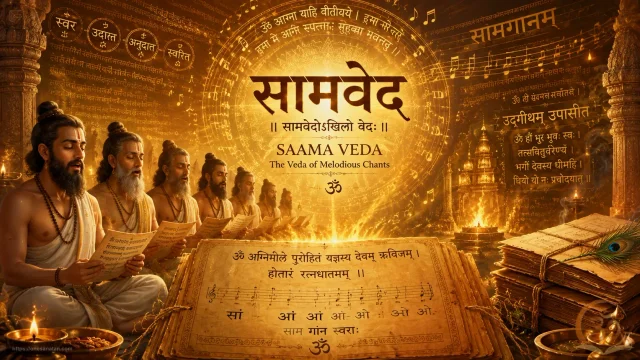
Sama Veda
ॐ
हिन्दी सारांश
रात्रि साम गान स्वप्न गान (सपने का संगीत) के साथ रात्रि देवी के व्याख्यत् (फैले हुए) गुहा अगात् (गुफा में गए) रूप का वर्णन करता है। अमर्त्या (अमर) देवी की शांति स्वर से सर्वं प्रावृणोत् (सब कुछ ढक दिया) की स्तुति करते हुए वसूनि निमिषा (खजानों की पलक झपकी) को निद्रा संगीत के साथ गाता है।
卐
English Summary
The Ratri Sama Gana describes the spread-out Night Goddess who entered the cave through svapna gana (dream music). The immortal goddess who covered everything (sarvam pravrunot) with shanti svara (peaceful tones), whose treasure blinks (vasuni nimisha) are celebrated through nidra sangita (sleep music), invoking divine rest and protection.
Detailed Spiritual Essence
In हिन्दी & English
Detailed Spiritual Essence
रात्रिर्व्याख्यद् गुहा अगात् (स्वप्न गान)
अमर्त्या सर्वं प्रावृणोत् (शांति स्वर)
देवी वसूनि निमिषा (निद्रा संगीत)॥
सामवेद की प्राचीन मौखिक परंपराओं में निहित, 'रात्रि साम गान' वैदिक संगीत और मंत्र विज्ञान के मूल स्त्रोतों में से एक है। उत्तर वैदिक काल से संबंध रखने वाला यह पवित्र गान उन महान ऋषियों की तपस्या का फल है जिन्होंने ब्रह्मांडीय स्पंदनों को साक्षात् अनुभव किया था। इसका प्रामाणिक ग्रंथीय स्रोत सामवेद संहिता के अंतर्गत आने वाले गान ग्रंथों से जुड़ा है, जहाँ ऋग्वेद की ऋचाओं को सामगान के रूप में रूपांतरित करने के नियम और पद्धतियाँ सुरक्षित हैं। ऐतिहासिक दृष्टि से इन गीतों को भारतीय शास्त्रीय संगीत की मूल आधारशिला माना जाता है, जो यज्ञीय अनुष्ठानों को आत्मिक और आधिदैविक चिंतन से जोड़ते हैं।
साहित्यिक और संरचनात्मक दृष्टि से इस रचना का विन्यास प्राचीन वैदिक छंदों, विशेष रूप से गायत्री और त्रिष्टुप छंदों के संगीतबद्ध रूपों पर आधारित है। विशुद्ध वैदिक संस्कृत में रचित यह साम गान 'स्तोभ' यानी संगीत पूरक ध्वनियों (जैसे ऊँ, हाउ, ओवा) के संवलन से अपनी अद्भुत लय प्राप्त करता है। इसकी भाषा अत्यंत प्रतीकात्मक और पुरातन व्याकरणिक रूपों से युक्त है, जो ध्वनि, श्वास और मौन के बीच के प्राचीन संबंध को प्रकट करती है। यह संरचना प्रारंभिक भारतीय आध्यात्मिक और lyrical mysticism का एक उत्कृष्ट उदाहरण प्रस्तुत करती है।
पारंपरिक रूप से 'रात्रि साम गान' का पाठ या गायन प्रदोष काल या संध्या के समय किया जाता है, जब सूर्य अस्त होता है और रात्रि पृथ्वी को अपने आंचल में समेट लेती है। यह समय बाह्य चेतना से मुड़कर आंतरिक विश्राम और चिंतन में प्रवेश करने का होता है। हालांकि यह किसी विशिष्ट लोक-उत्सव से बंधा नहीं है, किंतु संध्या वंदन और निशा-कालीन साधनाओं में इसका विशेष स्थान है। साधक इस शांत और उपशामक ध्वनि का उपयोग मानसिक विकारों को शांत करने और अपनी आंतरिक लय को ब्रह्मांडीय शांति के साथ जोड़ने के लिए करते हैं।
आध्यात्मिक परंपरा के अनुसार, इस गान के श्रवण और मनन से साधक को अगाध मानसिक शांति और सुरक्षा की प्राप्ति होती है। रात्रि को केवल अंधकार नहीं, बल्कि एक देवी, संरक्षिका और मातृत्व शक्ति के रूप में देखा जाता है जो समस्त जीवों को अपनी गोद में सुलाकर उनकी रक्षा करती है। वैदिक आचार्यों का मत है कि इन निशा-कालीन मंत्रों के चिंतन से जागृत अवस्था के अहंकार का शमन होता है, जिससे साधक हृदय की उस गुहा (गुहा अगात्) में प्रवेश करता है जहाँ परम सत्य का निवास है। इस शाश्वत और अमर स्वर के प्रभाव से चेतना अपने मूल स्रोत में विश्राम पाती है।
इस पवित्र पाठ और इसके पारंपरिक अर्थों का संपादन और सत्यापन चौखम्भा संस्कृत संस्थान द्वारा प्रकाशित सामवेद संहिता के प्रामाणिक संस्करणों एवं पारंपरिक भाष्यों के आधार पर किया गया है। ये विश्वसनीय ग्रंथ वैदिक संगीत के स्वरों, उच्चारणों और पाठांतरों की पवित्रता को यथावत बनाए रखते हैं, जिससे OneSanatan.com के पाठकों तक शत-प्रतिशत शुद्ध सामग्री पहुँचे।
सार रूप में, 'रात्रि साम गान' साधक के लिए उस परम शांति और दिव्य मौन का द्वार है जो असीम ब्रह्मांड की गोद में निहित है। ये पंक्तियाँ हमें संसार के कोलाहल से निकालकर उस पवित्र अंधकार की ओर ले जाती हैं जहाँ से वास्तविक आंतरिक प्रकाश का उदय होता है। इस प्राचीन रात्रि-संगीत के माध्यम से साधक निद्रा और विश्राम को केवल एक शारीरिक आवश्यकता नहीं, बल्कि चेतना के पुनर्नवीनीकरण और अनंत सत्ता से जुड़ने का एक दिव्य अवसर मानकर अनुभव करता है।
रात्रिर्व्याख्यद् गुहा अगात् (स्वप्न गान)
अमर्त्या सर्वं प्रावृणोत् (शांति स्वर)
देवी वसूनि निमिषा (निद्रा संगीत)॥
Rooted in the ancient oral traditions of the Sama Veda, the Ratri Sama Gana belongs to the foundational stratum of Vedic liturgical music. Dating back to the late Vedic period, traditionally associated with the ancient rishis who cognized the cosmic vibrations of the Samhitas, this sacred chant has been preserved through the rigorous oral discipline of the Samin lineages. Its scriptural source is traced directly to the recitations of the Sama Veda Samhita, specifically within the esoteric Gana texts that dictate the musical articulation of the Rigvedic verses when transformed into Saman chants. Historical scholarship views these compositions as the bedrock of classical Indian music, bridging the gap between ritual sacrifice and profound metaphysical contemplation.
From a literary and structural perspective, the text is composed in ancient Vedic metres, primarily manifesting the meditative cadence of Gayatri and Tristubh chhandas as adapted for musical rendering. Rendered in pristine Vedic Sanskrit, the Sama Gana relies heavily on stobha insertions—musical syllables such as 'om', 'hau', and 'ova'—which elevate the poetic structure into a vehicle for ecstatic and tranquil sonic meditation. The linguistic texture is deeply symbolic, utilizing archaic grammatical forms that capture the primordial interplay between sound, breath, and silence, making the text an exemplary model of early Indo-Aryan lyrical mysticism.
Traditionally, the Ratri Sama Gana is recited during the twilight hours, specifically as the sun sets and night envelops the earth, symbolizing the transition from the externalized waking consciousness to the interiorized realm of rest and reflection. While not tied to large public festivals, it occupies a vital place in specialized meditative rituals and evening Sandhyavandanam contexts where the soothing, restorative properties of nocturnal chants are invoked. Practitioners often utilize this sacred melody during the twilight transition to cleanse the mental slate, aligning their internal rhythm with the cosmic descent of night, peace, and restorative stillness.
Spiritual tradition ascribes profound metaphysical benefits to this chant, viewing the night not merely as an absence of light, but as a divine, protective maternal force—Ratri—that gathers all living beings into the sanctuary of inner repose. Acharyas and commentators of the Vedic tradition emphasize that contemplating these nocturnal verses dissolves the agitation of the waking ego, granting access to the guha (the hidden cave of the heart) where the Supreme Self resides. Through the sonic envelopment of the amartya (immortal) cadence, the seeker experiences a deep ontological release, shedding the transient burdens of material existence and resting in unshakeable inner peace.
Editorial verification of this sacred text and its contextual exegesis relies upon standard scholarly editions of the Sama Veda Samhita with traditional commentaries, such as those published by Chaukhamba Sanskrit Series Office, which systematically preserve the traditional Gana notations and accents. These authentic repositories ensure that the integrity of the Vedic musical markers, tonal inflections, and esoteric groupings remains uncompromised for contemporary seekers and scholars alike, upholding the rigorous standards valued by OneSanatan.com.
In its ultimate spiritual interpretation, the Ratri Sama Gana serves as an auditory portal to the transcendent peace of the divine feminine and the absolute quietude of the unmanifest cosmos. The verses guide the practitioner beyond the fleeting illusions of the waking world into the sacred darkness of divine grace, where true illumination dawns. By engaging with this primordial night song, one learns to embrace rest not as unconsciousness, but as a conscious return to the infinite source of all being and spiritual wealth.
Divine Chanting
Ratri Sama Gana - AI Voice
Sacred AI Recitation
Premium Devotional Experience
ॐ
Sacred Script
अमर्त्या सर्वं प्रावृणोत् (शांति स्वर)
देवी वसूनि निमिषा (निद्रा संगीत)॥
Spiritual Guidance
What is the origin of the Ratri Sama Gana and who composed it?
The Ratri Sama Gana originates from the ancient Sama Veda, which is primarily dedicated to the musical and spiritual rendition of Vedic hymns. It was envisioned by ancient seers and rishis who perceived the cosmic vibrations of the universe in deep meditation. This sacred chant is specifically structured around Ratri (Night), invoking the divine feminine energy and peace associated with the nocturnal hours.
When is the best time to recite the Ratri Sama Gana for maximum benefit?
The most auspicious time to recite or listen to the Ratri Sama Gana is during the twilight hours (Pradosha) or late evening leading into the night. Practicing it during these quiet hours helps calm the restless mind, as the natural stillness of the night aligns harmoniously with the meditative frequency of the Sama Veda chants. Early morning hours before sunrise (Brahma Muhurta) are also considered acceptable for advanced meditative reflection.
What is the spiritual benefit of this chant according to classical Hindu texts?
According to Vedic traditions and classical texts associated with Sama Veda upasana, chanting the Ratri Sama Gana bestows inner peace, psychological balance, and protection from fear and negativity. The Chandogya Upanishad emphasizes that meditating upon the Sama chants leads to the purification of the mind and direct realization of the higher Self. It transforms restless desires into spiritual devotion by harmonizing the vital life forces (prana) within.
How can beginners properly approach learning the Ratri Sama Gana with its intricate musical notes?
Beginners should first listen to traditional audio recordings to familiarize themselves with the specific musical pitches (swaras) and intonations unique to Sama Veda recitation. Since Sama Gana relies heavily on musical flow rather than standard Vedic spoken accents, starting with line-by-line repetition alongside our Hindi and English meaning guides is recommended. Patience and regular practice under a knowledgeable guide ensure that the vibration of each note is correctly pronounced.
Are there regional variations in how the Ratri Sama Gana is chanted across India?
Yes, due to the oral tradition passing down through different Vedic shakhas (branches) like the Kauthuma, Jaiminiya, and Ranayaniya, subtle variations exist in regional renditions. While the core lyrical text and spiritual essence remain identical, the musical modulations and prolongations of vowels (stobhas) can vary slightly between traditions in South India and North India. OneSanatan.com provides a standardized yet authentic version to help practitioners connect with its universal spiritual depth.
Explore More Divine Text
Related Prayers
2 Voices
shuddhikaran mantra lyrics
Shuddhikaran Mantra Lyrics with Hindi & English Meaning – शुद्धिकरण मंत्र, Purity, Protection & Benefits
2 Voices
swasti na indro mantra lyrics
Swasti Na Indro Mantra Lyrics (ॐ स्वस्ति न इन्द्रो) – Meaning, Translation & Benefits

2 Voices
bhojan mantra lyrics
Bhojan Mantra (Brahmarpanam) Lyrics with Hindi & English Meaning – भोजन मंत्र, Gratitude & Mindful Eating
2 Voices
gayatri mantra lyrics
Gayatri Mantra Lyrics (ॐ भूर्भुवः स्वः) in Sanskrit, Hindi & English Meaning with Benefits
🕉️
शास्त्र-सम्मत • Shastric Verification
Drik Ganit Ephemeris Review
Classical Text Collation
OneSanatan Vidvat Parishad & Shastra Editorial Council (विद्वत् परिषद्)
Curated and cross-verified by traditional Sanskrit acharyas, Drik Ganit astronomical researchers, and Puranic editors. Every stotra, shloka, and festival calculation is reviewed against canonical classical editions — including Gita Press and Chaukhamba Sanskrit Sansthan — to safeguard textual fidelity, metric rhythm (Chhandas), and spiritual authenticity.