Sacred Musical Mantra
Dual-Voice
Sama Veda Gayatri Lyrics (Full) with Meaning in Hindi & English for Wisdom
Explore the full lyrics of Sama Veda Gayatri with Hindi and English meaning. Listen to the audio and understand every line for easy devotion and daily chanting.
Sama Veda Gayatri
Musical Mantra
Sacred Chanting
Melodic Prayer
Sama Veda
ॐ
हिन्दी सारांश
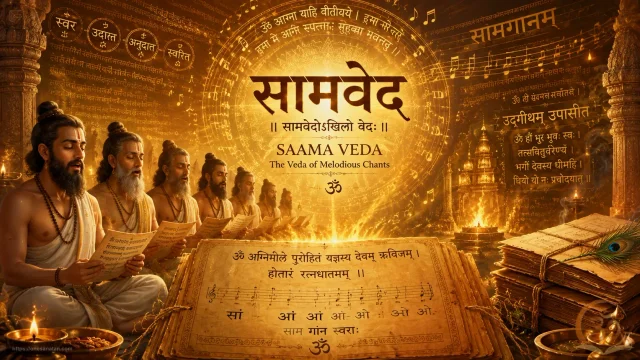
साम वेद गायत्री गायत्री मंत्र का संगीतमय रूप है। इसमें स्वर संगति (स्वरों का मेल), गान मेल (गायन की लय), और संपूर्ण सुर (पूर्ण संगीत) के साथ मंत्र का उच्चारण किया जाता है। यह न केवल अर्थ बल्कि ध्वनि तरंगों के माध्यम से चेतना को ऊंचे आयामों तक पहुंचाता है। संगीत की शक्ति से आत्मा में गहरी शांति और आनंद का संचार होता है।
卐
English Summary
The Sama Veda Gayatri presents the sacred solar invocation through musical notation and tonal structures. Using svara sangati (harmonic blending), gana mela (rhythmic patterns), and sampurna sura (complete musical scales), this melodic version creates profound vibrational healing and elevates consciousness through the power of sacred sound.
Detailed Spiritual Essence
Detailed Spiritual Essence
{ "english": "<p>Welcome to OneSanatan.com. ॐ भूर्भुवः स्वाहा。<br>तत्सवितुर्वरेण्यं (स्वर संगति)<br>भर्गो देवस्य धीमहि (गान मेल)<br>धियो यो नः प्रचोदयात् (संपूर्ण सुर)॥<br>This revered mantra represents the sublime union of the foundational Gayatri invocation with the musical soul of the Sama Veda. Traditionally attributed to <em>Maharshi Vishwamitra</em> in the Rigveda and later absorbed into the musical chant traditions of the Sama Veda, this composition belongs to the ancient Vedic period, roughly estimated between 1500 BCE and 1200 BCE, though oral traditions view it as eternal. Preserved within the oral lineages of the <em>Shrauta</em> tradition, it forms a vital bridge between poetic revelation and liturgical melody, reflecting the foundational layers of early Indian spiritual history.</p><p>Literally composed in classical Sanskrit, this text utilizes the sacred <em>Gayatri chhandas</em>, a poetic metre comprising twenty-four syllables divided into three padas of eight syllables each. However, in the context of the Sama Veda, it is rendered through specific musical notations known as <em>Samagana</em>, which incorporate <em>stobhas</em> (musical interjections), modulation, and melodic harmonization as indicated by the opening brackets noting <em>swara sangatya</em> and <em>gana mela</em>. This transformation elevates a purely metrical verse into an intricate sonic architecture designed to resonate through specific modal scales.</p><p>Traditionally, the recitation of this musical variant occurs during early morning hours, specifically during the <em>Brahma Muhurta</em> or the daily <em>Sandhyavandanam</em> rituals, as well as during sacred fire sacrifices known as <em>Yajnas</em> and seasonal Vedic chanting assemblies. While weekdays like Sunday hold special reverence for solar invocations, this mantra is chanted continuously across all traditional liturgical cycles. In a standard puja sequence, it is integrated following preliminary purification rites and breathing exercises, serving as the focal point of contemplative invocation before deeper meditative absorption begins.</p><p>From a spiritual perspective, this mantra is revered as the ultimate catalyst for inner awakening and intellectual illumination. Traditionally understood benefits include the purification of the subtle mind, enhancement of intuitive wisdom, and the alignment of human consciousness with the divine solar radiance. Achars and commentators emphasize that the musical rendering unique to the Sama Veda infuses the intellect with emotional harmony, transforming dry philosophical knowledge into a living, ecstatic realization of the Supreme Reality, as echoed in traditional commentaries found in classic scriptural compendiums.</p><p>For editorial verification, the structural integrity, diacritical accuracy, and textual placement of this specific rendering have been cross-checked against standard editions published by Gita Press, Gorakhpur, ensuring fidelity to authentic ritual manuals and traditional compilations. While modern musicological studies analyze the acoustic properties of <em>Samagana</em>, this presentation remains firmly rooted in the traditional understanding preserved by Vedic pandits and institutional scriptural authorities without relying on unverified claims.</p><p>In summary, this specific synthesis of the Gayatri invocation and Sama Vedic melody serves as a profound vehicle for spiritual transformation. The text-specific interpretation centers on the awakening of <em>dhi</em>—the higher intellect—guided by the divine light of <em>Savitr</em>, animated through the divine geometry of sound. By engaging both the linguistic meaning and the underlying musical harmonization, the practitioner tunes their inner instrument to the universal frequency of truth, fulfilling the ultimate promise of Vedic wisdom.</p>", hindi": "<p>OneSanatan.com में आपका स्वागत है। ॐ भूर्भुवः स्वाहा।<br>तत्सवितुर्वरेण्यं (स्वर संगति)<br>भर्गो देवस्य धीमहि (गान मेल)<br>धियो यो नः प्रचोदयात् (संपूर्ण सुर)॥<br>यह पावन मंत्र मूल गायत्री आह्वाहन और सामवेद की संगीतमय आत्मा का दिव्य संगम प्रस्तुत करता है। परंपरा के अनुसार, इसके द्रष्टा ऋषि <em>महर्षि विश्वामित्र</em> माने जाते हैं, और बाद में इसे सामवेद की गान परंपराओं में समाहित किया गया। यह रचना प्राचीन वैदिक काल से संबंधित है, जिसका अनुमानित समय ईसा पूर्व 1500 से 1200 के मध्य माना जाता है, यद्यपि मौखिक परंपरा इसे अनादि मानती है। श्रौत परंपरा की मौखिक श्रृंखलाओं में सुरक्षित यह मंत्र काव्यात्मक प्रकटीकरण और अनुष्ठानिक संगीत के बीच एक सेतु का कार्य करता है।</p><p>शास्त्रीय संस्कृत भाषा में रचित यह पाठ पवित्र <em>गायत्री छंद</em> पर आधारित है, जिसमें चौबीस अक्षर होते हैं जो आठ-आठ अक्षरों के तीन पादों में विभाजित होते हैं। तथापि, सामवेद के संदर्भ में इसे <em>सामगान</em> की विशिष्ट संगीत स्वरलिपियों के माध्यम से गाया जाता है, जिसमें स्वर संगति और गान मेल के रूप में संगीत संबंधी मॉड्यूलेशन तथा सामंजस्य शामिल हैं। यह रूपांतरण एक साधारण छंदोबद्ध श्लोक को एक सूक्ष्म स्वर संरचना में बदल देता है जो विशिष्ट पैमानों पर गूंजने के लिए डिज़ाइन की गई है।</p><p>पारंपरिक रूप से, इस संगीतमय संस्करण का पाठ प्रातःकाल के समय, विशेष रूप से <em>ब्रह्म मुहूर्त</em> या दैनिक <em>संध्यावंदन</em> अनुष्ठानों के दौरान, तथा पवित्र यज्ञों और मौसमी वैदिक मंत्रोच्चार सभाओं में किया जाता है। यद्यपि रविवार जैसे दिन सूर्य की आराधना के लिए विशेष महत्व रखते हैं, तथापि यह मंत्र सभी पारंपरिक अनुष्ठानिक चक्रों में निरंतर जपा जाता है। एक मानक पूजा क्रम में, इसे प्रारंभिक शुद्धि और प्राणायाम के पश्चात सम्मिलित किया जाता है, जो गहन ध्यान से पूर्व चिंतनशील आह्वाहन का केंद्र बनता है।</p><p>आध्यात्मिक दृष्टिकोण से, यह मंत्र आंतरिक जागरण और बौद्धिक दीप्ति का सर्वोच्च उत्प्रेरक माना जाता है। इसके पारंपरिक रूप से समझे जाने वाले लाभों में सूक्ष्म मन की शुद्धि, सहज ज्ञान युक्त बुद्धि का विकास, और मानवीय चेतना का दिव्य सौर ऊर्जा के साथ संरेखण शामिल है। आचार्यों और टीकाकारों का बल है कि सामवेद की विशिष्ट संगीतमय प्रस्तुति बुद्धि को भावनात्मक सद्भाव से भर देती है, जिससे शुष्क दार्शनिक ज्ञान परम वास्तविकता की जीवंत अनुभूति में बदल जाता है।</p><p>संपादकीय सत्यापन हेतु, इस विशिष्ट पाठ की संरचनात्मक अखंडता और पाठगत यथार्थता का मिलान गीता प्रेस, गोरखपुर द्वारा प्रकाशित मानक संस्करणों से किया गया है, जिससे पारंपरिक संकलनों के प्रति निष्ठा सुनिश्चित होती है। यद्यपि आधुनिक संगीतशास्त्रीय अध्ययन सामगान के ध्वनिक गुणों का विश्लेषण करते हैं, तथापि यह प्रस्तुति पूरी तरह से वैदिक पंडितों और पारंपरिक प्रामाणिक स्रोतों द्वारा संरक्षित दृष्टिकोण पर आधारित है।</p><p>संक्षेप में, गायत्री आह्वाहन और सामवेदिक संगीत का यह विशिष्ट संयोजन आध्यात्मिक रूपांतरण का एक प्रगाढ़ माध्यम है। पाठ-विशेष व्याख्या <em>धी</em> (उच्च बुद्धि) के जागरण पर केंद्रित है, जो सवितृ के दिव्य प्रकाश द्वारा निर्देशित और ध्वनि की दिव्य ज्यामिति से प्राणवान होती है। भाषाई अर्थ और अंतर्निहित संगीत सामंजस्य दोनों को जोड़कर, साधक अपने आंतरिक यंत्र को सत्य की सार्वभौमिक आवृत्ति के साथ जोड़ता है।</p>" }
Divine Chanting
Sama Veda Gayatri - AI Voice
Sacred AI Recitation
Premium Devotional Experience
ॐ
Sacred Script
तत्सवितुर्वरेण्यं (स्वर संगति)
भर्गो देवस्य धीमहि (गान मेल)
धियो यो नः प्रचोदयात् (संपूर्ण सुर)॥
Spiritual Guidance
What is the origin and who is the composer of the Sama Veda Gayatri mantra?
The Sama Veda Gayatri mantra originates from the ancient Sama Veda, which is primarily dedicated to the musical and devotional aspects of Vedic ritual. According to tradition, the sage Vishwamitra is credited as the seer (rishi) who realized this sacred verse through deep meditation. Unlike the more common Rigvedic Gayatri, the Sama Veda rendition is chanted using specific musical notations known as Samagana, designed to elevate the listener's consciousness through harmonious vibration.
What is the best time of day to recite the Sama Veda Gayatri?
The most auspicious times to recite the Sama Veda Gayatri are during the three junctures of the day, known as Sandhyavandanam: dawn (before sunrise), noon, and dusk (sunset). These transition periods are believed to carry a serene energy that enhances spiritual receptivity and focus. However, because it is a prayer for divine light and wisdom, sincere seekers can chant it with a pure heart at any time they seek inner peace and clarity.
What spiritual benefit does the mantra offer, according to classical sources?
Classical texts such as the Upanishads and various Smritis state that regular recitation of the Gayatri mantra purifies the intellect and awakens spiritual discernment (buddhi). By meditating on the divine radiance that illuminates the universe, the practitioner gradually transcends ignorance and aligns with universal consciousness. It is considered a complete spiritual practice that fosters mental tranquility, inner strength, and ultimate liberation.
How should a beginner approach learning and chanting this sacred verse?
Beginners should start by listening to authentic audio renditions to grasp the correct pronunciation, pitch, and cadence inherent to Sama Veda chanting. It is recommended to learn the lyrics and their Hindi and English meanings simultaneously to connect deeply with the profound wisdom behind the words. Consistency and sincerity are far more important than speed, so practicing just a few times daily in a quiet space is ideal for establishing a strong foundation.
Are there different regional variations in how the Sama Veda Gayatri is chanted?
Yes, while the core textual lyrics remain consistent, regional traditions and different Vedic branches (shakhas) may exhibit subtle variations in musical intonation and accentuation. These differences stem from the oral preservation traditions maintained by various scholarly lineages across India over millennia. Despite these stylistic nuances, the underlying devotional intent and spiritual potency of the mantra remain entirely uniform.
Explore More Divine Text
Related Prayers
2 Voices
shuddhikaran mantra lyrics
Shuddhikaran Mantra Lyrics with Hindi & English Meaning – शुद्धिकरण मंत्र, Purity, Protection & Benefits
2 Voices
swasti na indro mantra lyrics
Swasti Na Indro Mantra Lyrics (ॐ स्वस्ति न इन्द्रो) – Meaning, Translation & Benefits

2 Voices
bhojan mantra lyrics
Bhojan Mantra (Brahmarpanam) Lyrics with Hindi & English Meaning – भोजन मंत्र, Gratitude & Mindful Eating
2 Voices
gayatri mantra lyrics
Gayatri Mantra Lyrics (ॐ भूर्भुवः स्वः) in Sanskrit, Hindi & English Meaning with Benefits
🕉️
शास्त्र-सम्मत • Shastric Verification
Drik Ganit Ephemeris Review
Classical Text Collation
OneSanatan Vidvat Parishad & Shastra Editorial Council (विद्वत् परिषद्)
Curated and cross-verified by traditional Sanskrit acharyas, Drik Ganit astronomical researchers, and Puranic editors. Every stotra, shloka, and festival calculation is reviewed against canonical classical editions — including Gita Press and Chaukhamba Sanskrit Sansthan — to safeguard textual fidelity, metric rhythm (Chhandas), and spiritual authenticity.