Sacred Solar Music
Dual-Voice
Surya Sama Gana Lyrics (Full) with Meaning in Hindi & English for Vitality & Illumination
Explore the full lyrics of Surya Sama Gana with Hindi and English meaning. Listen to the audio and understand every line for easy devotion and daily chanting.
Surya Sama Gana
Solar Music
Sun God Chant
Sama Veda
Golden Tones
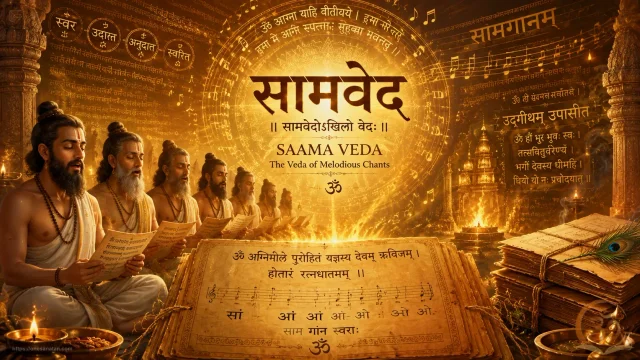
ॐ
हिन्दी सारांश
सूर्य साम गान आदित्य गान (सूर्य संगीत) के साथ सूर्यमंडल से उदित होने वाले सूर्य की स्तुति करता है। हिरण्यवर्ण (स्वर्ण वर्ण) और स्वर्ण स्वर के माध्यम से हरिणी (सुनहरी) सूर्य की महिमा करता है। रश्मिमालिनी (किरणों की माला वाली) सूर्य देवी का तेज संगीत से गुणगान करके जीवनी शक्ति और दिव्य प्रकाश प्रदान करता है।
卐
English Summary
The Surya Sama Gana celebrates the solar deity rising from the sun's orb through aditya gana (solar music). With hiranyavarna (golden-colored) and swarna svara (golden tones), it praises the radiant Harini (golden one) and Rashmi-malini (garlanded with rays), invoking vital energy and divine illumination through solar melodies.
Detailed Spiritual Essence
In हिन्दी & English
Detailed Spiritual Essence
उद् ये सूर्यमण्डलात् (आदित्य गान)
हिरण्यवर्णं हरिणीं (स्वर्ण स्वर)
सुवर्णवर्णां रश्मिमालिनीम् (तेज संगीत)॥ OneSanatan.com में आपका स्वागत है। यह पवित्र रचना सीधे तौर पर सामवेद की प्राचीन मौखिक परंपराओं से उद्भूत है, जो वैदिक ज्ञान का संगीत-भंडार है। परंपरा के अनुसार इसे प्राचीन ऋषियों द्वारा गहन ध्यानमय समाधि में सुना गया माना जाता है, और यह श्रुति (जिसे सुना गया है) के शाश्वत निकाय का अंग है। प्रारंभिक वैदिक काल में रचित यह ग्रंथ, जिसे विद्वान 1500 ईसा पूर्व से 1000 ईसा पूर्व के बीच मानते हैं, आदिम नाद और दिव्य ज्योति के अद्वैत संगम का प्रतीक है, जिसे पारंपरिक वैदिक पाठ परंपराओं द्वारा पीढ़ी-दर-पीढ़ी सुरक्षित रखा गया है।
साहित्यिक और संरचनात्मक दृष्टि से, यह स्तोत्र पारंपरिक वैदिक छंदों में रद्ध है जो साम-गान की लय, स्वर और गति को नियंत्रित करते हैं। वैदिक संस्कृत में रचित इस पाठ में हिरण्यवर्ण (स्वर्ण-समान) और रश्मिमालिनी (किरणों की माला से युक्त) जैसे शब्दों का प्रयोग करते हुए प्रकाशमय बिंबों का सुंदर संसार रचा गया है। पारंपरिक काव्य की तुलना में साम-गान संगीतबद्ध प्रस्तुति के लिए संरचित होते हैं, जहाँ स्वर अक्षरों को आध्यात्मिक उत्थान का माध्यम बनाते हैं और भाषाई अर्थ को सीधे सात्विक अनुभूति में बदल देते हैं।
पारंपरिक रूप से, इस सूर्य स्तोत्र का पाठ प्रातःकालीन बेला और संध्या वंदना के समय अत्यंत फलदायी माना जाता है, जो साधक की आंतरिक लय को उगते हुए सूर्य के साथ जोड़ता है। रथ सप्तमी, मकर संक्रांति और रविवार (सूर्य वार) जैसे पवित्र अवसरों पर इसका विशेष महत्व होता है। दैनिक पूजा क्रम में, इस मंत्र का उच्चारण प्रातःकालीन शुद्धि के बाद, पूर्वी क्षितिज की ओर मुख करके तब किया जाना चाहिए जब प्रकाश की पहली किरणें पृथ्वी को स्पर्श करती हैं, जो उच्च चेतना के जागरण का प्रतीक है।
आध्यात्मिक दृष्टि से, यह पाठ सर्वोच्च जीवन शक्ति, दिव्य दीप्ति और आंतरिक स्पष्टता के आह्वान के रूप में प्रतिष्ठित है। वैदिक परंपरा के आचार्यों का उपदेश है कि सूर्य की स्वर्ण आभा का ध्यान करने से शरीर की सूक्ष्म नादिकाएं शुद्ध होती हैं और अविद्या का अंधकार दूर होता है। सूर्य मंडल को केवल एक भौतिक पिंड के रूप में नहीं, अपि तु सर्वोच्च आंतरिक ज्योति (अंतरज्योति) के दृश्यमान स्वरूप के रूप में समझा जाता है। इस साम-गान का पाठ आध्यात्मिक उत्साह, मानसिक स्थिरता और शारीरिक ओज को जाग्रत करता है।
इस पवित्र सामग्री का संपादकीय सत्यापन गीता प्रेस, गोरखपुर तथा सामवेद संहिता के प्रामाणिक और पारंपरिक संस्करणों पर आधारित है। ये ग्रंथ इस स्तोत्र की वर्ण-शुद्धता, स्वर-चिह्नों और पारंपरिक अनुष्ठानिक संदर्भों की पुष्टि करते हैं। साधक और विद्वान वैदिक पाठ के लिए आवश्यक शुद्धता और सटीक phonetic (ध्वन्यात्मक) अखंडता को बनाए रखने के लिए इन प्रतिष्ठित संस्करणों पर भरोसा कर सकते हैं।
संक्षेप में, सूर्य को समर्पित यह साम-गान ब्रह्मांडीय ऊर्जा और मानव चेतना के बीच एक गहरा ध्यान-सेतु है। इसके स्वर्णमय बिंबों और लयबद्ध संरचना से जुड़कर, साधक जीवन और ज्ञान के मूल स्रोत का आह्वान करता है। यह स्पष्टता, जीवन शक्ति और ब्रह्मांड के प्राकृतिक व दिव्य क्रम के साथ गहरे तालमेल की इच्छा रखने वाले प्रत्येक व्यक्ति के लिए एक परिवर्तनकारी आध्यात्मिक साधना है, जो पवित्र ध्वनि के माध्यम से प्रकाश की प्राप्ति का शाश्वत मार्ग प्रशस्त करती है।
उद् ये सूर्यमण्डलात् (आदित्य गान)
हिरण्यवर्णं हरिणीं (स्वर्ण स्वर)
सुवर्णवर्णां रश्मिमालिनीम् (तेज संगीत)॥ Welcome to OneSanatan.com. This sacred composition emerges directly from the ancient oral traditions of the Sama Veda, the musical repository of Vedic wisdom. Traditionally understood to be heard by the ancient seers through deep meditative communion, this Vedic chant belongs to the timeless corpus of *Shruti*—that which is heard. Rooted in the early Vedic period, estimated by scholars between 1500 BCE and 1000 BCE, this text represents the profound fusion of primordial sound, *Nada*, and celestial light, *Jyotish*, preserved meticulously across generations within the orthodox Vedic recitation traditions.
From a literary and structural perspective, this hymn is composed in traditional Vedic metres (*Chhandas*) that govern the cadence, intonation, and rhythmic flow of Sama-gana. Written in classical Vedic Sanskrit, the text utilizes a sophisticated web of luminous imagery, employing terms like Hiranyavarna (golden-hued) and Rashmimalini (garlanded with rays). Unlike conventional poetic verse, Sama hymns are structured for musical performance, where notes (*Swaras*) elevate the syllable into a vehicle of spiritual elevation, transforming linguistic meaning into direct sonic experience.
Traditionally, the recitation of this solar hymn is intimately connected with the dawn and morning twilight (*Sandhya Vandana*), aligning the practitioner's inner rhythms with the rising sun. It holds a place of special prominence during sacred solar observances such as *Ratha Saptami*, *Makar Sankranti*, and weekly worship on Sundays (*Surya Vara*). In a standard daily puja sequence, this chant is ideally offered immediately after the morning purification rites, while facing the eastern horizon as the first rays of light touch the earth, symbolizing the awakening of higher consciousness.
Spiritually, the text is revered as an invocation of supreme vitality, divine illumination, and inner clarity. Achayas of the Vedic tradition explain that meditating upon the golden radiance of the sun purifies the subtle channels of the body and dispels the darkness of ignorance (*Avidya*). The solar orb is understood not merely as a physical star, but as the visible manifestation of the supreme inner light (*Antarjyoti*). Chanting this Sama-gana awakens spiritual enthusiasm, mental steadfastness, and physiological vigor, bridging the gap between individual awareness and cosmic intelligence.
Editorial verification of this sacred material draws upon authentic Vedic compendiums traditionally published by institutions such as Gita Press, Gorakhpur, and standard scholarly editions of the *Sama Veda Samhita* with traditional commentaries. These texts confirm the orthography, accentuation marks (*Swaras*), and traditional ritual contexts associated with the solar hymns. Scholars and practitioners can rely on these established editions to maintain the purity and precise phonetic integrity required for Vedic recitation.
In summary, this Sama-gana dedicated to Surya is a profound meditative bridge between cosmic energy and human consciousness. By engaging with its golden imagery and rhythmic sonic structure, the seeker invokes the very source of life and wisdom. It serves as a transformative spiritual tool for anyone seeking clarity, vitality, and a deeper alignment with the natural and divine order of the universe, offering an enduring pathway to illumination through sacred sound.
Divine Chanting
Surya Sama Gana - AI Voice
Sacred AI Recitation
Premium Devotional Experience
ॐ
Sacred Script
हिरण्यवर्णं हरिणीं (स्वर्ण स्वर)
सुवर्णवर्णां रश्मिमालिनीम् (तेज संगीत)॥
Spiritual Guidance
What is the origin and who is the composer of the Surya Sama Gana?
Surya Sama Gana originates directly from the Sama Veda, one of the four sacred foundational texts of Sanatana Dharma. As part of the Vedic shruti tradition, it is considered apauruṣeya (not composed by man), representing eternal cosmic vibrations heard by ancient rishis. The hymns are structured specifically for musical chanting (gana), blending Vedic poetry with sacred melodies designed to invoke the solar deity.
What is the best time and duration to recite this Sama Veda hymn?
The most auspicious time to recite the Surya Sama Gana is during Brahma Muhurta or at sunrise (Surya Udaya) when solar vitality is at its peak. Practicing during these morning hours helps align your biorhythms with nature and maximizes the energetic intake from the sun. A standard practice usually spans 10 to 15 minutes, allowing ample time for deep breathing, meditative absorption, and correct pronunciation of the Vedic notes.
What spiritual and physical benefits does this mantra offer according to classical sources?
Classical Vedic texts state that meditating on the Surya Sama Gana purifies the subtle energy channels (nadis) and bestows physical vitality, mental clarity, and spiritual illumination. In traditions rooted in the Surya Upanishad and Sama Veda commentaries, chanting these hymns helps eradicate ignorance (tamas) and awakens higher consciousness. It is believed to grant the practitioner tejas (radiance), robust health, and protection from lower energetic influences.
How can a beginner properly learn and recite this hymn without prior Vedic training?
Beginners should start by listening to established audio recordings on OneSanatan.com to familiarize themselves with the traditional pitch, cadence, and swaras of Sama Gana. Since Vedic chanting relies heavily on precise intonation, reading the bilingual Hindi and English translations alongside the transliterated text is essential for understanding the meaning. Practicing slowly under the guidance of an audio aid or mentor ensures safe and effective recitation without straining the voice.
Are there regional variations in the recitation style of the Surya Sama Gana?
Yes, while the core textual verses of the Sama Veda remain uniform across India, the musical rendering (gana) varies slightly due to distinct Shakhas (Vedic branches) and oral traditions. For instance, practitioners belonging to the Kauthuma, Jaiminiya, or Ranayaniya shakhas may exhibit subtle differences in musical intonation and hand gestures (mudras) used to mark the notes. However, the underlying spiritual resonance and devotion directed toward Surya remain universally powerful regardless of the regional style.
Explore More Divine Text
Related Prayers
2 Voices
shuddhikaran mantra lyrics
Shuddhikaran Mantra Lyrics with Hindi & English Meaning – शुद्धिकरण मंत्र, Purity, Protection & Benefits
2 Voices
swasti na indro mantra lyrics
Swasti Na Indro Mantra Lyrics (ॐ स्वस्ति न इन्द्रो) – Meaning, Translation & Benefits

2 Voices
bhojan mantra lyrics
Bhojan Mantra (Brahmarpanam) Lyrics with Hindi & English Meaning – भोजन मंत्र, Gratitude & Mindful Eating
2 Voices
gayatri mantra lyrics
Gayatri Mantra Lyrics (ॐ भूर्भुवः स्वः) in Sanskrit, Hindi & English Meaning with Benefits
🕉️
शास्त्र-सम्मत • Shastric Verification
Drik Ganit Ephemeris Review
Classical Text Collation
OneSanatan Vidvat Parishad & Shastra Editorial Council (विद्वत् परिषद्)
Curated and cross-verified by traditional Sanskrit acharyas, Drik Ganit astronomical researchers, and Puranic editors. Every stotra, shloka, and festival calculation is reviewed against canonical classical editions — including Gita Press and Chaukhamba Sanskrit Sansthan — to safeguard textual fidelity, metric rhythm (Chhandas), and spiritual authenticity.