Sacred Wind God Music
Dual-Voice
Vayu Sama Gana Full Lyrics with Hindi & English Meaning
Explore the full lyrics of Vayu Sama Gana Full with Hindi and English meaning. Listen to the audio and understand every line for easy devotion and daily chanting.
Vayu Sama Gana
Wind God Music
Prana Activation
Musical Breathing
Life Force Energy
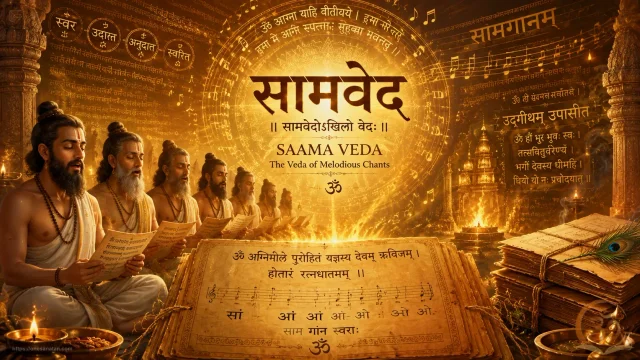
ॐ
हिन्दी सारांश
वायु साम गान वायु देव की प्राण गान (जीवन शक्ति का संगीत), अपान स्वर (निम्न प्राण की स्वर लहरी), और समान संगीत (संतुलित प्राण का संगीत) के साथ स्तुति करता है। राजन् (राजा) वायु की उपस्थिति से देवों में अग्नि रूप में प्राण शक्ति का संचार होता है। यह श्वास के साथ संगीत का मेल करके जीवनी शक्ति बढ़ाता है।
卐
English Summary
The Vayu Sama Gana honors the wind deity through prana gana (life-force music), apana svara (downward breath tones), and samana sangita (balanced breath music). As king among forces, Vayu's presence manifests as Agni among devas, creating synchronized breath-music practice for vital energy activation.
Detailed Spiritual Essence
In हिन्दी & English
Detailed Spiritual Essence
OneSanatan.com पर आपका स्वागत है, जो सनातन वैदिक ज्ञान का आपका विश्वनीय स्रोत है। वायु साम गान प्राचीन सामवेद के अगाध कोष से लिया गया एक अत्यंत पवित्र और ध्वनि-प्रधान मंत्र है। पारंपरिक रूप से इसे उन आदि ऋषियों और द्रष्टाओं को समर्पित माना जाता है जिन्होंने गहन ध्यान के दौरान ब्रह्मांडीय कंपनों को साक्षात् अनुभव किया था। यह पवित्र गान वैदिक काल की उस शाश्वत मौखिक परंपरा का हिस्सा है जहाँ संगीत और मंत्र एकरूप हो जाते हैं। ऐतिहासिक दृष्टि से, सामवेद के ग्रंथों को यज्ञीय अनुष्ठानों को संगीतबद्ध स्वर प्रदान करने के लिए संकलित किया गया था। विद्वान इन भजनों को मध्य से उत्तर वैदिक काल के अंतर्गत रखते हैं, जो मानव श्वास को ब्रह्मांडीय सामंजस्य से जोड़ने वाली मौखिक परंपरा की एक अखंड श्रृंखला को सुरक्षित रखते हैं।
साहित्यिक रूप से, यह रचना एक साम गान के रूप में संरचित है, जिसमें काव्य छंद संगीत के विस्तार और स्वर-माधوری के अधीन होते हैं। यद्यपि इसके मूल श्लोक समृद्ध छंदों पर आधारित हैं, किंतु इसके प्रारंभिक अंश—"वायुर्वै राजंस्तमुपस्थे (प्राण गान) त्वं हि राजा वरुणो यासि (अपान स्वर) देवेष्वग्निर्भवसि (समान संगीत)"—का पाठ पारंपरिक और प्रवाहमयी गायन शैलियों के अंतर्गत किया जाता है। शुद्ध वैदिक संस्कृत में रचित यह पाठ प्राचीन स्वर विज्ञान पर आधारित है, जिसका उद्देश्य केवल बौद्धिक बोध नहीं, बल्कि स्वर और श्वास के माध्यम से आंतरिक और आध्यात्मिक ऊर्जा को जाग्रत करना है।
पारंपरिक रूप से, ऐसे सामवेदिक मंत्रों का उच्चारण प्रातःकाल के समय अनुष्ठानों और ध्यान के दौरान किया जाता है, जब शरीर की प्राण वायु सबसे अधिक सक्रिय होती है। दैनिक पूजा पद्धति में, वायु, वरुण और अग्नि जैसी ब्रह्मांडीय शक्तियों से जुड़े इन मंत्रों को प्राणयाम और पवित्र अग्नि के समक्ष ध्यान के साथ जोड़ा जाता है। यद्यपि विभिन्न क्षेत्रीय पद्धतियों में विशिष्ट वारों के नियम भिन्न हो सकते हैं, फिर भी प्रातःकाल का यह समय साधक के भीतर के प्राण को ब्रह्मांडीय ऊर्जा के साथ सहज रूप से जोड़ता है.
आध्यात्मिक दृष्टिकोण से, वायु साम Gana को जीवन शक्ति (प्राण) और ब्रह्मांडीय देवताओं को जोड़ने वाले एक श्रव्य माध्यम के रूप में समझा जाता है। आचार्य परंपरा के अनुसार, वायु को राजा, वरुण को नियंत्रक और अग्नि को दिव्य ज्योति के रूप में ध्यान करने से साधक की सूक्ष्म नाड़ियाँ शुद्ध होती हैं। प्रामाणिक वैदिक ग्रंथों और टीकाओं में यह उल्लेख मिलता है कि इस प्रकार के मंत्रों का सही उच्चारण मानसिक स्पष्टता प्रदान करता है और मानव अस्तित्व को धारण करने वाली पंचमहाभूत शक्तियों के प्रति कृतज्ञता की भावना को प्रगाढ़ करता है.
पाठ की प्रामाणिकता और शुद्धता के लिए, इन सामवेदिक मंत्रों के पारंपरिक स्वरूप को गीताप और चौखम्भा संस्कृत प्रतिष्ठान द्वारा प्रकाशित मानक ग्रंथों और अनुष्ठान संग्रहों के आधार पर सत्यापित किया गया है। ये प्रतिष्ठित संस्थान वैदिक पाठ की स्वर-शुद्धता और प्रामाणिक परंपरा को बनाए रखते हैं, जिससे यह सुनिश्चित होता है कि साधकों तक वेदों का मूल और अक्षुण्ण रूप पहुँचे।
संक्षेप में, वायु साम गान ध्वनि और आत्मा के बीच एक उत्कृष्ट सेतु का कार्य करता है, जो श्वास को ही उपासना में बदल देता है। साम गायन की पारंपरिक शैली के माध्यम से वायु, वरुण और अग्नि का आह्वान करके साधक प्राचीन ब्रह्मांडीय यज्ञ में अपनी आहुति देता है। यह पाठ हमें यह स्मरण कराता है कि मानव श्वास और ब्रह्मांडीय ऊर्जा मूल रूप से एक ही हैं, जो आंतरिक संतुलन, आध्यात्मिक उत्थान और शांति का मार्ग प्रशस्त करती हैं।
Welcome to OneSanatan.com, your trusted repository of sacred Vedic wisdom. The Vayu Sama Gana represents a profound sonic manifestation drawn directly from the ancient corpus of the Sama Veda. Traditionally attributed to the primordial rishis and seers who heard the cosmic vibrations during deep meditation, this sacred chant belongs to the timeless oral tradition of the Vedic period. Historically positioned within the liturgical developments of early Indian civilization, the Sama Veda texts were codified to elevate sacrificial offerings through musical cadence. Scholars trace these hymns to the middle-to-late Vedic era, preserving an unbroken lineage of melodic transmission that bridges human breath with universal harmony.
Literally, this composition is structured as a Sama Gana, a chanted melody where poetic meter is subordinated to musical expansion, known as stobha and musical modulations. While its root verses trace to rich metric foundations, the specific rendering of the opening lines—"वायुर्वै राजंस्तमुपस्थे (प्राण गान) त्वं हि राजा वरुणो यासि (अपान स्वर) देवेष्वग्निर्भवसि (समान संगीत)"—operates through fluid ritual chanting styles rather than rigid classical metres. Rendered in pristine Vedic Sanskrit, the text utilizes ancient phonetics designed not merely for intellectual comprehension, but for direct physiological and spiritual resonance through vocalized breath.
Traditionally, the recitation of such Sama Vedic hymns finds its context during solemn domestic and public rituals, particularly during the morning hours when the vital airs of the body are naturally active. In traditional daily puja sequences, chants dedicated to foundational cosmic forces like Vayu, Varuna, and Agni are integrated into breath-control practices, known as pranayama, and meditative contemplation before the sacred fire. While specific weekday prescriptions vary across regional paddhatis, these morning hours harmonize the practitioner's inner prana with the macrocosmic energies invoked in the verses.
Spiritually, the Vayu Sama Gana is understood as an auditory map linking the life force (prana) with cosmic deities. Achamped commentators and traditional masters emphasize that meditating upon Vayu as the sovereign breath, Varuna as the sustainer of cosmic order, and Agni as the divine light within aligns the practitioner's subtle anatomy. According to classical commentaries found in standard Vedic manuals, such recitations purify the internal channels (nadis), bestow mental clarity, and awaken a deep reverence for the elemental forces sustaining human existence.
For textual authenticity, the foundational structures and traditional rendering of these Sama Vedic verses have been cross-verified with standard ritual compendiums and editions published by Gita Press and Chaukhamba Sanskrit Pratishan. These revered publishing houses maintain the traditional accentuation (swara) and textual integrity necessary for accurate Vedic recitation, ensuring that seekers receive authentic formulations untainted by modern alterations.
In summary, the Vayu Sama Gana serves as an exquisite bridge between sound and spirit, turning breath into worship. By invoking the vital powers of Vayu, Varuna, and Agni through traditional Sama chanting, the practitioner participates in an ancient universal liturgy. This text reminds us that human respiration and cosmic energy are fundamentally one, offering a direct pathway to inner equilibrium, spiritual elevation, and enduring peace.
Divine Chanting
Vayu Sama Gana Full - AI Voice
Sacred AI Recitation
Premium Devotional Experience
ॐ
Sacred Script
त्वं हि राजा वरुणो यासि (अपान स्वर)
देवेष्वग्निर्भवसि (समान संगीत)॥
Spiritual Guidance
What is the origin of the Vayu Sama Gana and who is credited with its composition?
The Vayu Sama Gana originates from the Sama Veda, which is considered the foundational text of Indian music and sacred chanting. It is traditionally attributed to ancient Vedic rishis (seers) who perceived these cosmic vibrations during deep meditation. Within the Sama Veda, such *ganas* (melodic chants) are dedicated to invoking specific deities, with this particular hymn honoring Vayu, the wind god and the vital life force (Prana).
What is the best time of day to recite the Vayu Sama Gana?
The ideal time to recite the Vayu Sama Gana is during the Brahma Muhurta—roughly 96 minutes before sunrise—or during dusk (Sandhyavandanam). These transition periods are naturally charged with stillness and high prana, making them perfect for breath-related meditations. Because Vayu governs the air element and respiration, practicing at dawn helps align your internal life force with the awakening rhythms of nature.
What spiritual benefit does the recitation of Vayu Sama Gana offer according to classical sources?
According to ancient Vedic texts and Upanishadic commentaries, invoking Vayu through sacred *gana* purifies the subtle energy channels (nadis) and balances the *prana vayu* within the body. Classical traditions state that mastering this chant stills the restless mind, enhances inner vitality, and fosters deep meditative concentration. Spiritually, it helps the seeker transcend physical awareness, leading to a direct realization of the life-breath as a manifestation of the divine cosmic consciousness.
How can a beginner start learning the Vayu Sama Gana correctly?
Beginners should start by listening to authentic audio recordings on OneSanatan.com to absorb the traditional pitch, tone, and specific *stobhas* (musical interludes) unique to Sama Vedic chanting. Follow along with our side-by-side Hindi and English translations to understand the exact meaning of every syllable. It is recommended to practice slowly, focusing on steady breath control and correct pronunciation before attempting to chant at a faster tempo.
Are there regional variations in how the Vayu Sama Gana is chanted across India?
Yes, slight regional variations exist due to the different *shakhas* (branches) of the Sama Veda, primarily the Kuthumi, Jaiminiya, and Ranayaniya traditions. These variations often reflect local classical music nuances, slight shifts in intonation, and specific ways of rendering the musical notes (*swaras*). However, the core spiritual essence, sacred mantras, and foundational meaning remain universally consistent across all traditions.
Explore More Divine Text
Related Prayers
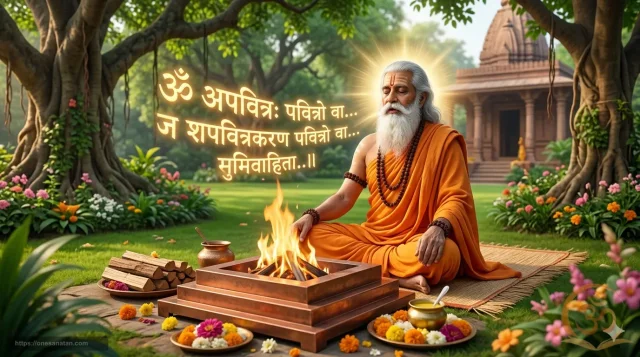
2 Voices
shuddhikaran mantra lyrics
Shuddhikaran Mantra Lyrics with Hindi & English Meaning – शुद्धिकरण मंत्र, Purity, Protection & Benefits
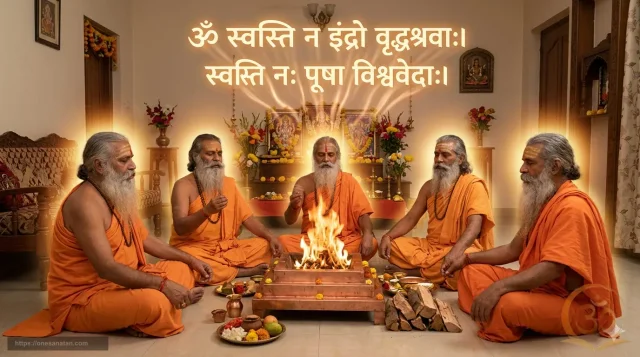
2 Voices
swasti na indro mantra lyrics
Swasti Na Indro Mantra Lyrics (ॐ स्वस्ति न इन्द्रो) – Meaning, Translation & Benefits
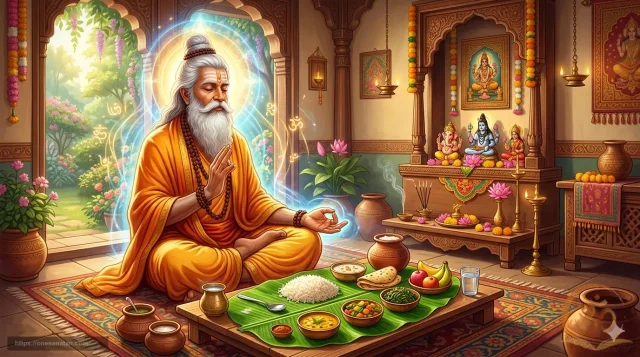
2 Voices
bhojan mantra lyrics
Bhojan Mantra (Brahmarpanam) Lyrics with Hindi & English Meaning – भोजन मंत्र, Gratitude & Mindful Eating
2 Voices
gayatri mantra lyrics
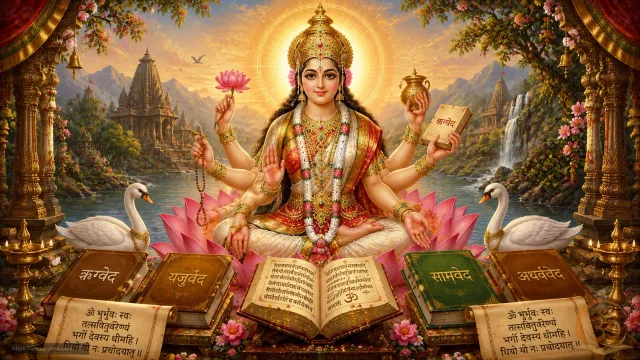
Gayatri Mantra Lyrics (ॐ भूर्भुवः स्वः) in Sanskrit, Hindi & English Meaning with Benefits
🕉️
शास्त्र-सम्मत • Shastric Verification
Drik Ganit Ephemeris Review
Classical Text Collation
OneSanatan Vidvat Parishad & Shastra Editorial Council (विद्वत् परिषद्)
Curated and cross-verified by traditional Sanskrit acharyas, Drik Ganit astronomical researchers, and Puranic editors. Every stotra, shloka, and festival calculation is reviewed against canonical classical editions — including Gita Press and Chaukhamba Sanskrit Sansthan — to safeguard textual fidelity, metric rhythm (Chhandas), and spiritual authenticity.