Sacred Yajur Veda
Dual-Voice
Ishavasya Upanishad Mantra Lyrics (Full) with Meaning in Hindi & English for Peace & Stability
Explore the full lyrics of Ishavasya Upanishad Mantra with Hindi and English meaning. Listen to the audio and understand every line for easy devotion and daily chanting.
Ishavasya Upanishad
Yajur Veda
Divine Presence
Spiritual Detachment
Sacred Renunciation
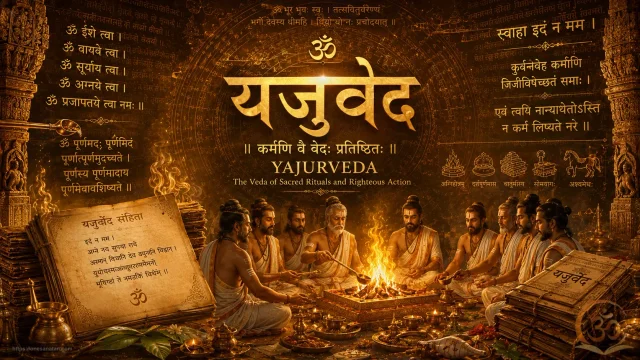
ॐ
हिन्दी सारांश
ईशावास्य उपनिषद मंत्र यजुर्वेद की सर्वोच्च शिक्षा प्रस्तुत करता है। संपूर्ण जगत् में जो कुछ भी चलायमान है, वह सब ईश (परमात्मा) से व्याप्त है। इसलिए त्याग पूर्वक (त्यक्तेन) भोग करो और किसी के धन की लालसा (गृध) मत करो। यह आध्यात्मिक वैराग्य और सर्वत्र ईश्वर दर्शन का महान संदेश है।
卐
English Summary
The Ishavasya Upanishad mantra declares that all that moves in this moving world is enveloped by the Divine (Isha). Therefore, enjoy life through renunciation (tyakta) and do not covet anyone's wealth. This teaches the profound yoga of seeing the Divine everywhere while maintaining spiritual detachment from material possessions.
Detailed Spiritual Essence
In हिन्दी & English
Detailed Spiritual Essence
OneSanatan.com में आपका स्वागत है। ईशावास्य उपनिषद, जिसे ईश उपनिषद भी कहा जाता है, पारंपरिक रूप से वैदिक ऋषियों को समर्पित है और यह शुक्ल यजुर्वेद के चालीसोंवें अध्याय के रूप में संकलित है। संहिता के बिल्कुल अंत में स्थित यह संक्षिप्त किंतु अत्यंत गंभीर ग्रंथ प्राचीन श्रुति परंपरा का अंग है, जिसे सहस्रों वर्षों तक मौखिक रूप से संरक्षित रखा गया। ऐतिहासिक दृष्टि से यह वैदिक वांग्मय का हिस्सा है, जो अनुष्ठानिक कर्म और पराविद्या के मध्य सेतु का कार्य करते हुए उत्तरवर्ती वेदांत परंपराओं के लिए दार्शनिक आधार तैयार करता है।
साहित्यिक रूप से यह ग्रंथ छंदोबद्ध वैदिक संस्कृत में रचा गया है, जिसके अठारह मंत्रों में मुख्य रूप से अनुष्टुप तथा अन्य वैदिक छंदों का प्रयोग हुआ है। इसके प्रसिद्ध प्रारंभिक मंत्र—"ईशावास्यमिदं सर्वं यत्किञ्च जगत्यां जगत्। तेन त्यक्तेन भुञ्जीथा मा गृधः कस्यस्विद्धनम्॥"—से इसकी संक्षिप्त और प्रभावकारी काव्यात्मक शैली स्पष्ट होती है। इसकी भाषा अत्यंत घनी, प्रतीकात्मक और दार्शनिक रूप से प्रखर है, जो कर्म और त्याग, सर्वव्यापकता और transcendence, तथा ज्ञान और अज्ञान जैसे परस्पर विरोधी प्रतीत होने वाले विषयों का सुंदर समन्वय प्रस्तुत करती है।
पारंपरिक अभ्यास में इस उपनिषद का पाठ शांत चित्त से मनन, ब्रह्ममुहूर्त के ध्यान और वेदांत अध्ययन के सत्रों के दौरान किया जाता है। यद्यपि उपनयन संस्कार या गीता जयंती जैसे पर्वों पर संपूर्ण वैदिक अध्ययन का महत्व होता है, तथापि यह ग्रंथ बाहरी कर्मकांड की अपेक्षा आंतरिक मानसिक अनुशासन के रूप में अधिक अपनाया जाता है। पारंपरिक साधक मानसिक स्थिरता, समता और अनासक्ति की प्राप्ति के लिए दैनिक ध्यानचर्या में इसके मंत्रों का स्मरण और चिंतन करते हैं।
आध्यात्मिक दृष्टि से यह ग्रंथ चर और अचर जगत में ईश्वर की उपस्थिति का बोध कराते हुए शांति और स्थिरता प्राप्त करने का मार्ग दिखाता है। इसका केंद्रीय उपदेश साधक को त्यागपूर्वक भोग करने—त्यक्तेन भुञ्जीथा—और दूसरों के धन की लालसा न करने का निर्देश देता है। आचार्यों जैसे आदि शंकराचार्य ने इस पर विस्तृत भाष्य लिखे हैं, जिसमें ज्ञान और कर्म के समन्वय से मुक्ति की प्राप्ति पर बल दिया गया है। इसके पारंपरिक लाभों में मोह, शोक और भय का नाश तथा ब्रह्मांडीय एकता में स्थित शांत चित्त की प्राप्ति सम्मिलित हैं।
मंत्रों और उनके क्रम का संपादकीय सत्यापन गीता प्रेस, गोरखपुर द्वारा प्रकाशित प्रामाणिक संस्करणों के आधार पर किया गया है, जो शुक्ल यजुर्वेद संहिता की पारंपरिक व्यवस्था को बनाए रखते हैं। ऐसे प्रामाणिक ग्रंथों के संपादकीय नोट्स इस बात की पुष्टि करते हैं कि यह उपनिषद किसी पृथक ग्रंथ के रूप में नहीं, अपितु सीधे संहिता के अंतर्गत निहित है। यह सतर्क संकलन यह सुनिश्चित करता है कि मंत्रों की संरचना और पारंपरिक उच्चारण की शुद्धता वैदिक परंपरा के अनुकूल बनी रहे।
संक्षेप में, यह प्रारंभिक मंत्र ईशावास्य उपनिषद के संपूर्ण आध्यात्मिक संदेश को समेटे हुए है: यह समस्त ब्रह्मांड ईश्वर से आच्छादित है, और वास्तविक स्वतंत्रता संग्रह में नहीं, बल्कि निस्स्वार्थ त्याग और संतोष में निहित है। साधक को यह स्मरण कराकर कि इस संसार में कुछ भी अहम् का नहीं है, यह ग्रंथ समस्त चिंताओं का निवारण करता है और स्थायी आंतरिक स्थिरता की नींव रखता है। OneSanatan.com पर हम इन पवित्र मंत्रों को आपके दैनिक जीवन में स्पष्टता, अनासक्ति और गहन आध्यात्मिक जुड़ाव की प्रेरणा हेतु प्रस्तुत करते हैं।
Welcome to OneSanatan.com. The Ishavasya Upanishad, also known as the Isha Upanishad, is traditionally attributed to Vedic rishis and forms the concluding fortieth chapter of the Shukla Yajur Veda. Placed at the very end of the Samhita, this short yet profound text belongs to the ancient Sruti tradition, preserved orally across millennia before being committed to writing. Historically positioned within the Vedic corpus, it bridges ritualistic karma with supreme spiritual knowledge, establishing a foundational philosophical bedrock for subsequent Vedanta traditions.
Literarily, the text is composed in classical Vedic Sanskrit and is structured primarily in Anushtubh and flexible Vedic metres across its eighteen verses. Beginning with the famous verse—"ईशावास्यमिदं सर्वं यत्किञ्च जगत्यां जगत्। तेन त्यक्तेन भुञ्जीथा मा गृधः कस्यस्विद्धनम्॥"—the composition displays a remarkably concise poetic form. Its language is dense, symbolic, and philosophically rigorous, employing precise terminology to reconcile seemingly contradictory concepts such as action and renunciation, immanence and transcendence, and knowledge and ignorance within a compact metrical framework.
In traditional practice, the recitation of this Upanishad is undertaken during quiet contemplation, Brahmamuhurta meditation, and study sessions dedicated to Vedanta. While major festivals like Upanayana anniversaries or Gita Jayanti often highlight overarching Vedic studies, this text is primarily approached as an inner mental discipline rather than an external ritual chant. Traditional practitioners recite or contemplate its verses during moments requiring deep emotional stability, mental equanimity, and detachment from material over-attachment, integrating its wisdom into daily meditative routines.
Spiritually, the text offers profound guidance on achieving inner peace and stability by recognizing the divine presence in all moving and unmoving things. The core teaching directs the seeker to enjoy the world through detachment—tyaktena bhunjiatha—abandoning greed for another's wealth. Acharyas like Adi Shankaracharya have commented extensively upon it, emphasizing that true liberation arises from the harmonious realization of knowledge and action. Traditionally understood benefits include the eradication of delusion, sorrow, and fear, fostering a steady, peaceful mind anchored in cosmic unity.
Editorial verification of the verses and numbering follows standard recensions published by Gita Press, Gorakhpur, which maintains the traditional ordering of the Shukla Yajur Veda Samhita. Editorial notes in such authoritative editions confirm its unique status as an Upanishad embedded directly within a Samhita, rather than appearing as a separate treatise. This careful preservation ensures that the structural integrity and phonetic nuance of the verses remain authentic to traditional Vedic transmission standards.
In summary, this opening verse encapsulates the overarching spiritual message of the Ishavasya Upanishad: the universe is enveloped by the Divine, and true freedom is found not in possessiveness, but in unselfish renunciation and contentment. By reminding the seeker that nothing truly belongs to the ego, the text dissolves anxiety and lays the groundwork for lasting inner stability. At OneSanatan.com, we present these sacred verses to inspire clarity, detachment, and profound spiritual alignment in daily life.
Divine Chanting
Ishavasya Upanishad Mantra - AI Voice
Sacred AI Recitation
Premium Devotional Experience
ॐ
Sacred Script
यत्किञ्च जगत्यां जगत्।
तेन त्यक्तेन भुञ्जीथा
मा गृधः कस्यस्विद्धनम्॥
Spiritual Guidance
What is the origin and traditional attribution of the Ishavasya Upanishad Mantra?
The Ishavasya Upanishad forms the concluding fortieth chapter of the Shukla Yajur Veda and is traditionally attributed to ancient Vedic sages. Because it is embedded directly within the Samhita portion of the Veda, it holds a uniquely revered status among the principal Upanishads. It serves as a foundational bridge between Vedic ritualistic sacrifices and profound non-dualistic philosophical realization.
What is the best time of day to recite or meditate upon this Vedic mantra?
The optimal time for chanting the Ishavasya Upanishad is during the Brahmamuhurta, roughly 90 minutes before sunrise, when the mind is naturally calm and untainted by daily distractions. Alternatively, practicing during the twilight hours of Sandhyavandanam (dawn and dusk) helps center the wandering intellect. Consistency in timing and maintaining a peaceful, clean environment significantly enhances its meditative impact.
What primary spiritual benefit does the Ishavasya Upanishad offer according to classical texts?
According to classical commentaries by Adi Shankara, this Upanishad dissolves the dualistic delusion of attachment and aversion by revealing the omnipresence of the Divine in all moving and unmoving creation. By internalizing its opening instruction that everything is enveloped by the Lord, a seeker attains ultimate mental stability and freedom from sorrow. The text explicitly liberates the practitioner from the bondage of selfish action through the realization of the immortal Self.
How should a beginner approach learning the Sanskrit lyrics and complex meaning of this mantra?
A beginner should start by listening to traditional audio recordings to grasp the precise Vedic intonation, meter, and pronunciation of each verse. Following this, reading line-by-line transliterations alongside word-for-word Hindi and English translations helps bridge the gap between sound and significance. Practicing with patience and focusing on one verse at a time prevents overwhelm and deepens contemplative understanding.
Are there regional variations in the text or recitation style of the Ishavasya Upanishad?
While the core philosophical verses remain remarkably consistent, minor variations exist between the Kanva and Madhyandina recensions of the Shukla Yajur Veda. These differences primarily manifest in subtle accent marks (swaras) and occasional phrasing rather than the core philosophical message. Regional traditions across India may employ slightly different musical chant cadences, but the sacred integrity of the Sanskrit text is meticulously preserved across all schools.
Explore More Divine Text
Related Prayers
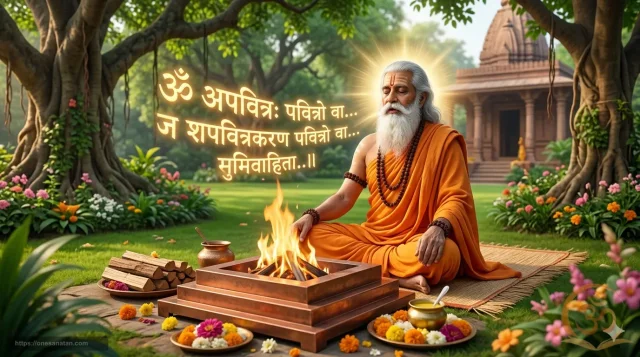
2 Voices
shuddhikaran mantra lyrics
Shuddhikaran Mantra Lyrics with Hindi & English Meaning – शुद्धिकरण मंत्र, Purity, Protection & Benefits
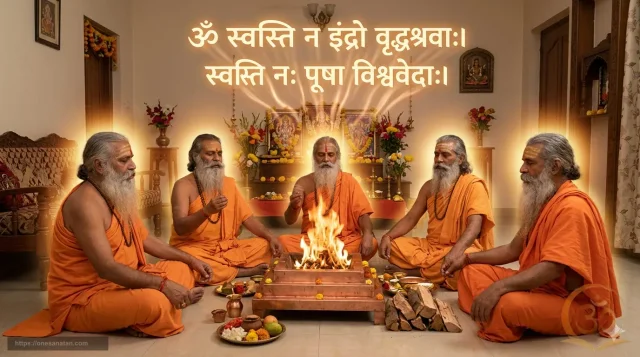
2 Voices
swasti na indro mantra lyrics
Swasti Na Indro Mantra Lyrics (ॐ स्वस्ति न इन्द्रो) – Meaning, Translation & Benefits
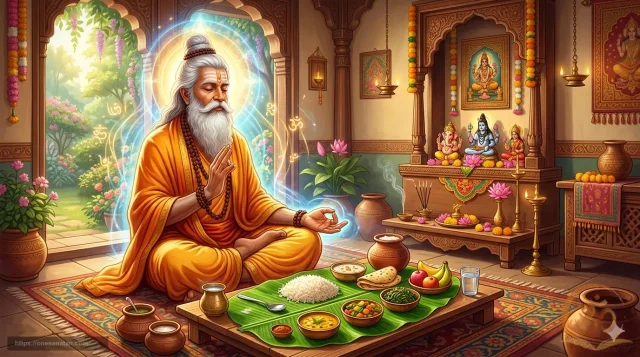
2 Voices
bhojan mantra lyrics
Bhojan Mantra (Brahmarpanam) Lyrics with Hindi & English Meaning – भोजन मंत्र, Gratitude & Mindful Eating
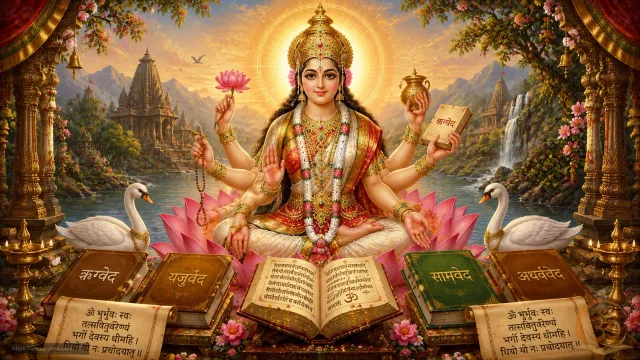
2 Voices
gayatri mantra lyrics
Gayatri Mantra Lyrics (ॐ भूर्भुवः स्वः) in Sanskrit, Hindi & English Meaning with Benefits
🕉️
शास्त्र-सम्मत • Shastric Verification
Drik Ganit Ephemeris Review
Classical Text Collation
OneSanatan Vidvat Parishad & Shastra Editorial Council (विद्वत् परिषद्)
Curated and cross-verified by traditional Sanskrit acharyas, Drik Ganit astronomical researchers, and Puranic editors. Every stotra, shloka, and festival calculation is reviewed against canonical classical editions — including Gita Press and Chaukhamba Sanskrit Sansthan — to safeguard textual fidelity, metric rhythm (Chhandas), and spiritual authenticity.