Sacred Sacred Intention
Dual-Voice
Krishna Yajurveda Sankalpa Mantra Full Lyrics with Hindi & English Meaning
Explore the full lyrics of Krishna Yajurveda Sankalpa Mantra Full with Hindi and English meaning. Listen to the audio and understand every line for easy devotion and daily chanting.
Sankalpa Mantra
Sacred Intention
Krishna Yajurveda
Divine Resolution
Mind-Speech Unity
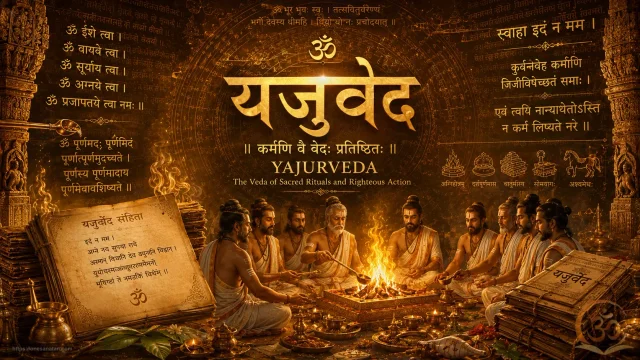
ॐ
हिन्दी सारांश
कृष्ण यजुर्वेद संकल्प मंत्र मनः (मन) और वाचा (वाणी) के युक्तम् (संयोजन) की प्रार्थना करता है। वाचः मे युक्तम् अस्तु मनसा (मेरी वाणी मन से जुड़े), आविर् आविर् मे एधि (प्रकट हो प्रकट हो मुझमें बढ़े) वेदस्य (वेद का ज्ञान)। मा मे वेदस्य वेदिता (मेरा वेद का ज्ञान नष्ट न हो) - संकल्प शक्ति की स्थापना।
卐
English Summary
The Krishna Yajurveda Sankalpa Mantra seeks alignment between mind (mano) and speech (vacha), praying: 'Let my mind be united with speech, let my speech be united with mind. May the knowledge of Vedas manifest and grow in me (avir avir me edhi vedasya). Let not the knowledge of Vedas depart from me (ma me vedasya vedita).' This establishes divine sankalpa (sacred intention).
Detailed Spiritual Essence
In हिन्दी & English
Detailed Spiritual Essence
मनो मे युक्तमस्तु वाचा वाचो मे युक्तमस्तु मनसा। आविरावीर्म एधि वेदस्य मा मे वेदस्य वेदिता॥ यह पावन उद्बोधन कृष्ण यजुर्वेद संकल्प मन्त्र के उस गम्भीर आध्यात्मिक क्षितिज को खोलता है, जो सनातन धर्म की प्राचीन मौखिक परंपरा में गहराई से निहित है। श्रुति परंपरा के अंतर्गत सुरक्षित यह मन्त्र यजुर्वेदीय संहिता का अंग है, जिसका ऐतिहासिक कालारम्भ उत्तर कांस्य युग अथवा प्रारंभिक लौह युग (लगभग 1500–1000 ईसा पूर्व) से माना जाता है। कृष्ण यजुर्वेद की शाखाओं, विशेष रूप से तैत्तिरीय परंपरा से संबद्ध यह मन्त्र उन प्राचीन ऋषियों की गम्भीर ध्यान-साधना का परिणाम है जिन्होंने ब्रह्मांडीय सत्यों को साक्षात् किया और इसे गुरु-शिष्य परंपरा के माध्यम से सुरक्षित रखा।
साहित्यिक और संरचनात्मक दृष्टि से यह मन्त्र वैदिक गद्य तथा प्राचीन छंदोबद्ध विधा में प्राच्य संस्कृत भाषा में रेषित है। शास्त्रीय छंदों से भिन्न, इस प्रकार के वैदिक मन्त्र प्राण के स्पंदन और स्वर-विधान पर आधारित होते हैं, जो इनकी ऊर्जा और कंपन की शुद्धता को बनाए रखने के लिए अनिवार्य हैं। कृष्ण यजुर्वेद की भाषाई संरचना में दार्शनिक गहराई पाई जाती है, जहाँ मन और वाणी जैसे सामान्य शब्द ब्रह्मांडीय तत्त्वों के रूप में प्रतिष्ठित होकर प्रारंभिक वैदिक दर्शन की परिपक्वता को दर्शाते हैं।
पारंपरिक वैदिक आचार-विचार में इस मन्त्र का उच्चारण मुख्य रूप से 'संकल्प' के अवसर पर किया जाता है, जो दैनिक संध्यावंदन, यज्ञों और प्रमुख अनुष्ठानों से पूर्व की जाने वाली मानसिक प्रतिज्ञा है। इसे सामान्यतः ब्रह्ममुहूर्त या संध्याकाल के शांत समय में उच्चारित किया जाता है। यह किसी भी पवित्र कार्य से पूर्व साधक की मानसिक और आध्यात्मिक एकाग्रता को साधने का कार्य करता है। पर्व-त्योहारों, व्रत और संस्कारों के आरंभ में साधक अपनी आंतरिक वृत्तियों को संयमित करने के लिए इस मन्त्र का आश्रय लेते हैं।
आध्यात्मिक दृष्टि से यह मन्त्र मन और वाणी की एकरूपता पर बल देता है, तथा यह प्रार्थना करता है कि मनुष्य का संकल्प और उसकी अभिव्यक्ति परस्पर विरोधी न हों। आचार्य सायण जैसे पारंपरिक आचार्यों के भाष्यों के अनुसार, मन और वाक् का यह समन्वय उस आंतरिक द्वैध को समाप्त करता है जो ब्रह्मविद्या की प्राप्ति में बाधक बनता है। स्वयं-प्रकाशमान दिव्य ज्योति से यह प्रार्थना की जाती है कि वेद का सार साधक के हृदय में प्रकट हो, जिससे वह केवल मन्त्रों को रटने वाला न बनकर वास्तविक ज्ञान का पात्र बन सके।
इस मन्त्र के पाठ और अनुष्ठानिक संदर्भों की संपादकीय सत्यता गीता प्रेस, गोरखपुर द्वारा प्रकाशित अधिकृत वैदिक ग्रंथों तथा चौखम्भा संस्कृत सीरीज ऑफिस द्वारा संकलित पारंपरिक ग्रंथों पर आधारित है। ये संस्करण सदियों पुरानी वैदिक परंपरा के अनुसार मन्त्रों के सही स्वर और पाठ की प्रमाणिकता की पुष्टि करते हैं। OneSanatan.com के संपादक यह सुनिश्चित करते हैं कि प्रत्येक प्रकाशित सामग्री शास्त्रीय दृष्टिकोण से पूर्णतः शुद्ध और प्रामाणिक हो।
संक्षेप में, यह मन्त्र आंतरिक शुद्धि और ज्ञान के प्रकाश के लिए एक शाश्वत प्रार्थना है। इसका मुख्य आध्यात्मिक संदेश यह है कि साधक की बिखरी हुई वृत्तियाँ केंद्रित होकर परम सत्य की ओर उन्मुख हों। मौन चिंतन और वाक् के मध्य सेतु का कार्य करते हुए, कृष्ण यजुर्वेद संकल्प मन्त्र मानवीय चेतना को दिव्य अनुशासन में ढालता है और साधक को भ्रम से मुक्त कर आत्मप्रकाश की ओर अग्रसर करता है।
मनो मे युक्तमस्तु वाचा वाचो मे युक्तमस्तु मनसा। आविरावीर्म एधि वेदस्य मा मे वेदस्य वेदिता॥ This sacred invocation opens the contemplative horizon of the Krishna Yajurveda Sankalpa Mantra, a foundational text deeply embedded in the ancient oral heritage of Sanatana Dharma. Traditionally preserved within the śruti lineage, this mantra belongs to the Yajurveda, one of the primary vedic compendiums historically dated to the late Bronze Age or early Iron Age (circa 1500–1000 BCE). Rooted in the Black Yajurveda recensions, notably the Taittiriya tradition, it carries the profound resonance of ancient rishis who cognized cosmic truths through deep meditative absorption, passing them down unbroken through generations of traditional Vedic scholars.
From a literary and structural perspective, the mantra is composed in classical Vedic prose and early poetic metres, expressed in pristine, archaic Sanskrit. Unlike strictly metred classical poetry, Vedic mantras like this operate on the rhythmic principles of breath and tonal accentuation (*svara*), which are vital for preserving their precise vibrational integrity. The linguistic architecture of the Krishna Yajurveda utilizes dense conceptual layering, where everyday terms such as *manas* (mind) and *vāc* (speech) are elevated to cosmic principles, reflecting the sophisticated philosophical framework of early Vedic liturgy.
Within traditional Vedic practice, this mantra is recited primarily during the *Sankalpa* phase—the preliminary mental resolve and dedication preceding daily *sandhyavandanam*, yajnas, and major ritual observances. It is commonly chanted in the tranquil hours of early dawn (*brahma muhurta*) or dusk, serving as a psychological and spiritual realignment before any sacred undertaking. Practitioners invoke these verses to harmonize their internal faculties, ensuring that outer ritual actions are perfectly synchronized with inner purity during auspicious festivals, monthly lunar observances, and lifelong samskaras.
Spiritually, the mantra addresses the profound duality and ultimate unity of thought and expression, praying that the mind and speech may never act in contradiction. According to traditional commentaries, such as those by Acharya Sayanacharya, aligning *manas* and *vāc* removes the internal fragmentation that obstructs spiritual realization and scriptural retention (*veda*). By invoking the self-revealing divine light (*āvir*), the seeker asks that the ultimate wisdom of the Vedas manifest clearly within their consciousness, making them a true vessel of sacred knowledge rather than a mere memorizer of texts.
Editorial verification of this mantra's ritual context and textual readings relies upon standard authoritative editions, such as the authentic Vedic compilations published by Gita Press, Gorakhpur, and traditional recension texts referenced by Chaukhamba Sanskrit Series Office. These editions confirm the traditional accent marks (*svara*) and readings necessary for correct liturgical execution, aligning with centuries of orthodox Vedic scholarship. Scholars at OneSanatan.com uphold these rigorous standards to ensure the spiritual and textual authenticity of every published verse.
Ultimately, this text-specific invocation is a plea for psychological integration and cognitive illumination. The summary of its spiritual intent lies in the surrender of fractured human volition to the supreme light of truth. By bridging the gap between silent contemplation and spoken articulation, the Krishna Yajurveda Sankalpa Mantra transforms ordinary human faculties into instruments of divine order, guiding the sincere practitioner from ephemeral confusion to eternal, self-luminous wisdom.
Divine Chanting
Krishna Yajurveda Sankalpa Mantra Full - AI Voice
Sacred AI Recitation
Premium Devotional Experience
ॐ
Sacred Script
वाचो मे युक्तमस्तु मनसा।
आविरावीर्म एधि वेदस्य
मा मे वेदस्य वेदिता॥
Spiritual Guidance
Who is the traditional author or origin of the Krishna Yajurveda Sankalpa Mantra?
The Sankalpa Mantra originates from the Krishna Yajurveda Samhita, compiled and structured by the great sage Veda Vyasa. As a foundational Vedic ritual formula, it has been passed down through an unbroken oral tradition (Guru-Shishya Parampara) for millennia. It serves as the formal intention-setting prelude for all major Hindu religious rites and Vedic sacrifices.
What is the best time and context to recite the Krishna Yajurveda Sankalpa Mantra?
The mantra is ideally chanted during the morning hours (Brahma Muhurta) or immediately before commencing any daily Puja, Homa, or special religious observance. It must be recited with a focused mind just before the main ritual begins to channel your spiritual energy. Chanting it at the onset acts as a psychological and cosmic alignment, dedicating your actions to the Divine.
What is the spiritual benefit of the Sankalpa Mantra, and which classical text supports this?
Reciting the Sankalpa purifies the mind, aligns individual will with cosmic order (Rta), and ensures that the spiritual fruits of your worship are successfully attained without obstacles. According to ancient Dharma Shastras and ritual texts like the Katyayana Shrautasutra, a ritual performed without a clear, spoken Sankalpa yields no spiritual merit. It bridges the gap between material action and divine grace by fixing the practitioner's pure intention.
How can beginners properly approach chanting and understanding the Sankalpa Mantra?
Beginners should first read the full lyrics provided on OneSanatan.com alongside the detailed Hindi and English meanings to comprehend what they are promising to the deities. Start by listening to traditional Vedic audio recordings to master the precise pitch, intonation, and Sanskrit pronunciation. Once familiar with the meaning, you can silently or softly articulate your specific gotra, name, and current time-space details as embedded within the mantra structure.
Are there regional variations in how the Krishna Yajurveda Sankalpa Mantra is recited?
Yes, while the core Vedic invocation remains rooted in the Taittiriya Brahmana of the Krishna Yajurveda, minor phonetic and structural variations exist across regions. Practitioners following different Shakhas (branches) or residing in South India versus North India may notice slight differences in how the Panchanga (astronomical details of time and place) is declared. However, the spiritual intent, core terminology, and ultimate purpose of invoking divine blessings remain universally consistent.
Explore More Divine Text
Related Prayers
2 Voices
shuddhikaran mantra lyrics
Shuddhikaran Mantra Lyrics with Hindi & English Meaning – शुद्धिकरण मंत्र, Purity, Protection & Benefits
2 Voices
swasti na indro mantra lyrics
Swasti Na Indro Mantra Lyrics (ॐ स्वस्ति न इन्द्रो) – Meaning, Translation & Benefits

2 Voices
bhojan mantra lyrics
Bhojan Mantra (Brahmarpanam) Lyrics with Hindi & English Meaning – भोजन मंत्र, Gratitude & Mindful Eating
2 Voices
gayatri mantra lyrics
Gayatri Mantra Lyrics (ॐ भूर्भुवः स्वः) in Sanskrit, Hindi & English Meaning with Benefits
🕉️
शास्त्र-सम्मत • Shastric Verification
Drik Ganit Ephemeris Review
Classical Text Collation
OneSanatan Vidvat Parishad & Shastra Editorial Council (विद्वत् परिषद्)
Curated and cross-verified by traditional Sanskrit acharyas, Drik Ganit astronomical researchers, and Puranic editors. Every stotra, shloka, and festival calculation is reviewed against canonical classical editions — including Gita Press and Chaukhamba Sanskrit Sansthan — to safeguard textual fidelity, metric rhythm (Chhandas), and spiritual authenticity.