Sacred Sacred Fire
Dual-Voice
Yajurveda Agni Mantra Full Lyrics with Hindi & English Meaning
Explore the full lyrics of Yajurveda Agni Mantra Full with Hindi and English meaning. Listen to the audio and understand every line for easy devotion and daily chanting.
Yajurveda Agni
Sacred Fire
Ritual Purification
Divine Energy
Fire Element
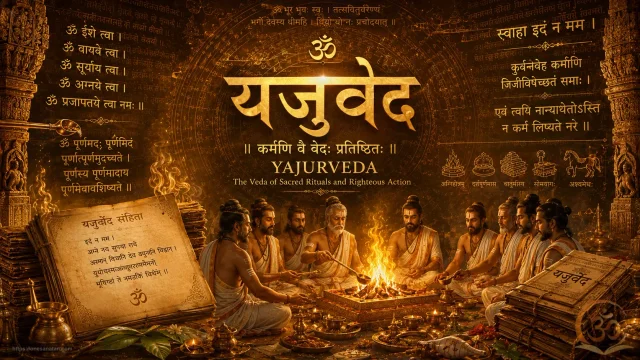
ॐ
हिन्दी सारांश
यजुर्वेद अग्नि मंत्र अग्ने (हे अग्नि देव) से सुपथा (अच्छे मार्ग) पर राये (धन/समृद्धि) के लिए अस्मान् नय (हमें ले चलो) की प्रार्थना करता है। विश्वानि वयुनानि विद्वान् (सभी मार्गों को जानने वाले) देव से जुहुराणम् एनो (पाप को जलाने वाले) युयोध्यः (दूर करने वाले) की स्तुति करके भूयिष्ठाम् नम उक्तिम् (सर्वाधिक नमस्कार) विधेम (करते हैं)।
卐
English Summary
The Yajurveda Agni Mantra prays: 'O Agni, lead us on the right path (supatha) to prosperity (raye), O god who knows all ways (vishvani vayunani vidvan). Remove from us the crooked sin (yuyodhyas maj juhuranam eno), to you we offer the highest praise and salutation (bhuyishtham te nama uktim vidhema).' This invokes fire's transformative power for purification and guidance.
Detailed Spiritual Essence
In हिन्दी & English
Detailed Spiritual Essence
OneSanatan.com पर आपका स्वागत है। यह अतीव पावन मंत्र—"अग्ने नय सुपथा राये अस्मान् विश्वानि देव वयुनानि विद्वान्। युयोध्यस्मज्जुहुराणमेनो भूयिष्ठां ते नम उक्तिं विधेम॥"—प्राचीन यजुर्वेद के सबसे अधिक प्रख्यात एवं प्रेरणादायी श्लोकों में से एक है। ऐतिहासिक दृष्टि से यह शुक्ल यजुर्वेद (वाजसनेयी संहिता, अध्याय 40, मंत्र 16) से संबद्ध है। वैदिक ऋषियों की मौखिक श्रुति परंपरा द्वारा सुरक्षित यह प्रार्थना उत्तर वैदिक काल की मानी जाती है। एक मूल ग्रंथ के रूप में यह मंत्र वैदिक यज्ञीय परंपराओं और उपनिषदों के उन्नत दार्शनिक चिंतन के मध्य एक सुदृढ़ सेतु का कार्य करता है।
यह मंत्र शास्त्रीय वैदिक संस्कृत में रचित है तथा इसमें पारंपरिक त्रिष्टुप् छंद का प्रयोग किया गया है, जिसके प्रत्येक चरण में अक्षर-विन्यास इसे एक गंभीर एवं ओजस्वी लय प्रदान करता है। इसकी साहित्यिक विधा एक आर्त प्रार्थना की है, जो प्रत्यक्ष अग्निदेव को संबोधित न होकर उस परम चेतना, नैतिक व्यवस्था और ब्रह्मांडीय प्रकाश के प्रतीक को समर्पित है। इसकी भाषा अत्यंत प्राचीर, प्रगल्भ और प्रतीकात्मक है, जिसमें कुटिल कर्मों के निवारण, सन्मार्ग पर चलने और पूर्ण समर्पण का भाव अत्यंत सहजता एवं गरिमा के साथ व्यक्त किया गया है.
पारंपरिक साधना पद्धति में इस पवित्र मंत्र का पाठ प्रातःकालीन और सायंकालीन संध्यावंदना, दैनिक अग्निहोत्र तथा प्रमुख हवन अनुष्ठानों के दौरान किया जाता है। यद्यपि इसका पाठ किसी भी दिन किया जा सकता है, तथापि संक्रांति, ऋतु परिवर्तन और गृहप्रवेश या उपनयन जैसे महत्त्वपूर्ण संस्कारों के समय इसका विशेष महत्व है। दैनिक पूजा क्रम में यह मंत्र प्रायः दीप प्रज्वलन या अग्नि स्थापन के अवसर पर उच्चारित किया जाता है, जो साधक के मन को एकाग्र कर ध्यान साधना के लिए अनुकूल वातावरण का निर्माण करता है।
आध्यात्मिक दृष्टिकोण से यह माना जाता है कि इस मंत्र के निरंतर जप से अज्ञान, अहंकार और मानसिक विकृतियाँ दूर होती हैं तथा साधक आध्यात्मिक समृद्धि और मोक्ष के प्रकाशमय मार्ग पर अग्रसर होता है। महान आचार्यों और टीकाकारों ने इस प्रार्थना को साधक के भीतर की दग्धी शक्ति को जाग्रत करने वाला और सभी प्रकार के छल-कपट को समाप्त करने वाला बताया है। गीता प्रेस गोरखपुर द्वारा प्रकाशित सनातन ग्रंथों और प्रामाणिक वैदिक वांग्मय के अध्ययन से यह पुष्ट होता है कि यह मंत्र साधक की विनम्रता और भगवत्कृपा प्राप्ति की पराकाष्ठा को प्रदर्शित करता है।
इस श्लोक के प्रामाणिक संपादन और सत्यापन हेतु गीता प्रेस तथा चौखम्बा प्रकाशन के अधिकृत संस्करणों का संदर्भ लिया गया है, जिससे इसके पाठ की शुद्धता सुनिश्चित होती है। वैदिक स्वरों की रक्षा करते हुए इसका पारंपरिक पाठ इसकी मूल ऊर्जा को अक्षुण्ण रखता है। OneSanatan.com पर संपादकीय परिशीलन यह सुनिश्चित करता है कि प्राचीन शास्त्रों की गरिमा, उनके शाब्दिक अनुशासन और उनकी जीवंत परंपरा का पूर्ण निर्वाह किया जाए।
संक्षेप में, यह यजुर्वेदिक मंत्र मानव चेतना के विकास के लिए एक शाश्वत मार्गदर्शिका है। सर्वज्ञ अग्निदेव से की गई यह प्रार्थना साधक को भौतिक बंधनों से ऊपर उठाकर धर्म, सत्य और परम कृपा के मार्ग पर चलने की प्रेरणा देती है। यह इस बात का प्रतीक है कि वास्तविक आध्यात्मिक उन्नति के लिए अंतःकरण की शुद्धि और परम शक्ति के प्रति पूर्ण समर्पण अत्यंत आवश्यक है।
Welcome to OneSanatan.com. The profound verse, "अग्ने नय सुपथा राये अस्मान् विश्वानि देव वयुनानि विद्वान्। युयोध्यस्मज्जुहुराणमेनो भूयिष्ठां ते नम उक्तिं विधेम॥", is one of the most celebrated invocations from the ancient Yajurveda, specifically rooted in the Shukla Yajurveda (Vajasaneyi Samhita, chapter 40, verse 16). Historically preserved through the oral śruti tradition of Vedic sages, this prayer belongs to the late Vedic period, traditionally associated with the lineage of ancient seers who cognized the eternal rhythms of the cosmos. As a foundational scriptural source, it bridges the ritualistic fire sacrifices of early Hinduism with the deeply internalised, philosophical realizations later elaborated in the Upanishads.
Literally composed in classical Vedic Sanskrit, this mantra employs the rhythmic and devotional Tristubh metre, a traditional four-quarter verse structure comprising forty-four syllables known for its solemn majesty and emotional resonance. The literary form is that of a heartfelt supplication directed to Agni, who stands not merely as the physical element of fire, but as the divine conduit of supreme consciousness, moral order, and cosmic light. The language is pristine and archaic, utilising rich metaphors where the path of righteousness, the removal of crooked sins, and the offering of ultimate surrender are expressed with profound poetic economy and spiritual directness.
In traditional practice, this sacred hymn is recited during morning and evening sandhyavandana, daily agnihotra rituals, and significant homa ceremonies. While it can be chanted throughout the week, it holds special prominence during auspicious transitions such as the solar equinoxes, seasonal shifts, and purification rites like housewarmings or sacred thread ceremonies. In the standard daily puja sequence, this mantra is typically chanted during the lamp-lighting (deep Prajjwalana) or fire oblation phase, serving to centre the devotee's mind and invoke divine clarity before deeper meditative practices begin.
From a spiritual perspective, the mantra is traditionally understood to dissolve ignorance, ego, and moral deviance, guiding the seeker along the radiant path of spiritual wealth (raya) and liberation. Revered commentators and ancient Acharyas have interpreted the prayer as an earnest plea to the inner divine fire to consume all deceitful tendencies and psychological darkness. According to canonical assessments found in reliable publishing traditions such as Gita Press Gorakhpur texts, this specific invocation represents the pinnacle of surrender, where the seeker acknowledges human limitation and asks the divine light to lead them from untruth to truth.
A rigorous editorial verification of this verse against authentic scriptural references, including standard editions from Gita Press and Chaukhamba publications, confirms its exact placement within the Vedic corpus as an essential prayer for divine guidance. The preservation of its precise accents (swara) in traditional recitation ensures its potency remains uncompromised across generations. Editorial review at OneSanatan.com ensures that these sacred texts are presented with utmost textual fidelity, respecting both their linguistic integrity and their living spiritual lineage.
In summary, this Yajurvedic mantra offers a timeless roadmap for human spiritual evolution. By invoking Agni as the omniscient knower of all deeds, the seeker transcends ordinary material desires, seeking instead the luminous path of righteousness and ultimate grace. It stands as a eternal reminder that true spiritual progress requires both the active removal of inner crookedness and the humble offering of deep, reverent surrender to the divine source of all light and wisdom.
Divine Chanting
Yajurveda Agni Mantra Full - AI Voice
Sacred AI Recitation
Premium Devotional Experience
ॐ
Sacred Script
विश्वानि देव वयुनानि विद्वान्।
युयोध्यस्मज्जुहुराणमेनो
भूयिष्ठां ते नम उक्तिं विधेम॥
Spiritual Guidance
What is the origin and who is the traditional composer of the Yajurveda Agni Mantras?
The Agni Mantras originating from the Yajurveda were divinely perceived by ancient Vedic rishis (seers) through deep meditative realization. While Sage Maharshi Dwaipayana Vyasa compiled and organized the Vedas into four distinct branches, the Yajurveda primarily focuses on the ritualistic application of these verses. Specifically, the Agni Suktas and mantras are dedicated to Agni, the Vedic deity of fire, who serves as the divine mediator and messenger between humanity and the higher cosmic forces.
What is the best time of day to recite the Yajurveda Agni Mantras?
Traditionally, the most auspicious time to recite Agni Mantras is during the Brahma Muhurta (about 96 minutes before sunrise) or during the daily twilight periods of Sandhyavandanam at dawn and dusk. These transition times are believed to carry high spiritual energy, making mental focus much easier to attain. However, because Agni represents the inner transformative fire of awareness, these mantras can also be recited silently with pure intention whenever one needs mental clarity or spiritual rejuvenation.
What are the primary spiritual benefits of chanting these mantras according to classical Vedic texts?
Classical Vedic literature, including commentaries by great sages like Sayana, teaches that chanting Agni Mantras purifies the mind, burns away negative karmic impressions, and awakens higher consciousness. In the context of the Shatapatha Brahmana, Agni represents inner prana and the life-force energy that elevates the practitioner toward self-realization. Regular and devout recitation fosters inner resilience, protects against negativity, and aligns the individual will with divine cosmic order (Rta).
How can beginners properly approach learning and chanting the Yajurveda Agni Mantras?
Beginners should start by listening to authentic audio recordings to master the precise Vedic swaras (musical accents and pitches), as traditional chanting relies heavily on exact intonation. Reading the complete Sanskrit lyrics alongside their Hindi and English translations helps bridge the gap between mechanical recitation and true devotional understanding. It is recommended to begin with just a few repetitions daily in a clean, quiet space, gradually increasing practice as the correct pronunciation becomes natural.
Are there regional variations in how the Yajurveda Agni Mantras are pronounced or structured?
Yes, due to centuries of oral transmission across vast geographical regions, slight variations exist in the recitation styles of the Yajurveda. The text itself is primarily divided into two main branches: the Shukla (White) Yajurveda, featuring the Vajasaneyi Samhita, and the Krishna (Black) Yajurveda, which includes texts like the Taittiriya Samhita. While these branches have distinct accentuation systems (swaras) and minor recitational differences, the core spiritual potency and underlying meaning of the Agni Mantras remain entirely consistent.
Explore More Divine Text
Related Prayers
2 Voices
shuddhikaran mantra lyrics
Shuddhikaran Mantra Lyrics with Hindi & English Meaning – शुद्धिकरण मंत्र, Purity, Protection & Benefits
2 Voices
swasti na indro mantra lyrics
Swasti Na Indro Mantra Lyrics (ॐ स्वस्ति न इन्द्रो) – Meaning, Translation & Benefits

2 Voices
bhojan mantra lyrics
Bhojan Mantra (Brahmarpanam) Lyrics with Hindi & English Meaning – भोजन मंत्र, Gratitude & Mindful Eating
2 Voices
gayatri mantra lyrics
Gayatri Mantra Lyrics (ॐ भूर्भुवः स्वः) in Sanskrit, Hindi & English Meaning with Benefits
🕉️
शास्त्र-सम्मत • Shastric Verification
Drik Ganit Ephemeris Review
Classical Text Collation
OneSanatan Vidvat Parishad & Shastra Editorial Council (विद्वत् परिषद्)
Curated and cross-verified by traditional Sanskrit acharyas, Drik Ganit astronomical researchers, and Puranic editors. Every stotra, shloka, and festival calculation is reviewed against canonical classical editions — including Gita Press and Chaukhamba Sanskrit Sansthan — to safeguard textual fidelity, metric rhythm (Chhandas), and spiritual authenticity.